00;00;08;12 - 00;00;39;14
Unknown
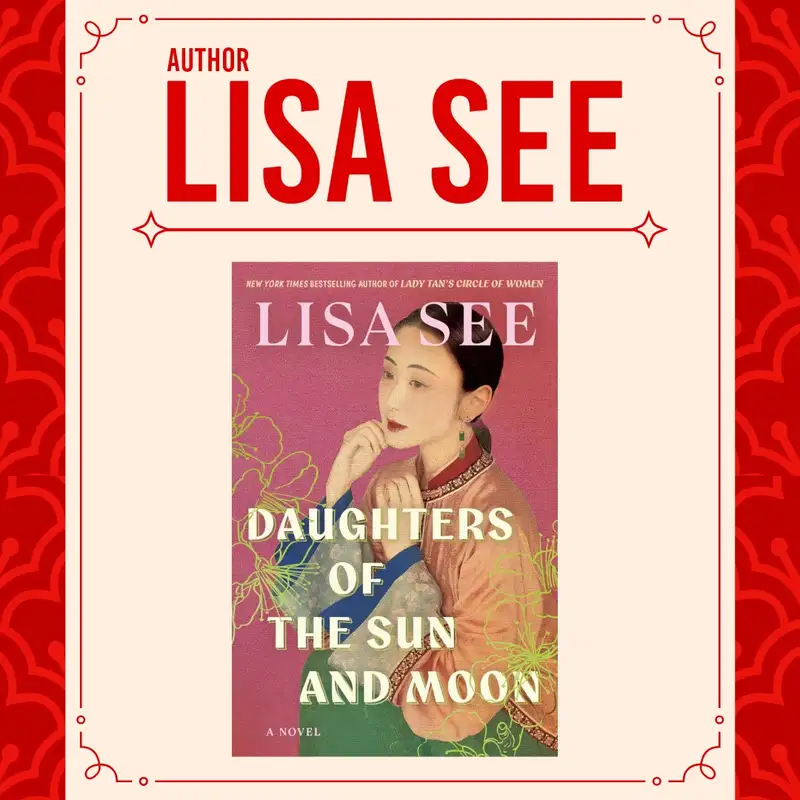
Hello and welcome to The Premise. I'm Jeniffer Thompson and I'm Chad Thompson, and today we are here with author Lisa See, who is extraordinary. I read all of her books and listeners, you are going to love this conversation. Lisa See is the New York Times bestselling author of Lady Tan's Circle of Women, The Island of C women, The Tea Girl of Hummingbird Lane, Snow Flower and The Secret Fan, Peony in Love, Shanghai Girls, China Dolls, and Dreams of Joy, which debuted at number one.
00;00;39;15 - 00;01;03;22
Unknown
She is also the author of On Gold Mountain, which tells the tells the story of her Chinese-American family's settlement in Los Angeles. She was the recipient of the Golden Spike Award from the Chinese Historical Association of Southern California and the History Makers Award from the Chinese American Museum. She also was named National Woman of the year by the Organization of Chinese American Women.
00;01;04;00 - 00;01;25;28
Unknown
Lisa See, welcome to the premise. Thank you so much for having me again. I know, I'm so happy you decided to come back and chat with us. Your work is just extraordinary. In fact, I teach classes on book marketing and branding, and I've told this story before, but I was used you as like, the best example of a well branded author.
00;01;26;00 - 00;02;08;18
Unknown
What's my brand? Very curious. Well, I remember I heard you speak like years ago, and we were talking about branding, and you said I had no idea that I had a brand or I even needed a brand, but my publisher did. Yeah. And I think they talk about friendship, you know, women's friendship. Yes. Deeply well-researched historical pieces. You know, you're going to learn something in a Lisa novel, and also you're going to discover really amazing characters who do experience so much, and their sisterhood and friendship and family is so important in your themes and in your books, which I really appreciate.
00;02;08;20 - 00;02;44;02
Unknown
Well, thank you so much. I you know, I it's funny because I guess in my head when I think about a brand, I think of that as being very deliberate. But what actually I think has evolved is my brand has done exactly that, that it's really very personal to me and what I'm interested in. And so I think over time, the themes that I've been writing about are, of course, you know, personal to me, but that somehow they've coalesced into something that seems very specific.
00;02;44;05 - 00;02;59;05
Unknown
And readers. I think that's true. You know, if you write what you love, if you try and create a brand, it's just not going to work. You just have to be true to what you want to do and try not to be all over the place, right? But, you know, be true to your voice and consistent in in.
00;02;59;07 - 00;03;19;27
Unknown
That is how you have created such a glorious brand for all of your books. Well, that's so cool. I love it. So today, writing horror under a pen name. Are you? No, no. But I you know, I did write mysteries back in the day, and you know that that was very different. And of course, my first book was nonfiction.
00;03;19;27 - 00;03;43;18
Unknown
But as soon as I started writing the historical novels, I, I think there was that was where I was supposed to be. And I, you know, when I think about what the next book is going to be, and I always have a lot of ideas that I've collected. And, you know, I finish one book and then I pull out everything that I've collected.
00;03;43;20 - 00;04;14;16
Unknown
What's next? They're always like about 30 ideas that I have sitting around over here. And when I look at all of them, you know, and and really think what, what could be next? It's such a personal choice for me. And it's really connected, I think, to like where I am in my own personal life in that moment. You know, is there something I feel a need to explore on a personal level?
00;04;14;17 - 00;04;43;12
Unknown
I, you know, with, with like Island of Sea Women. I had been writing a lot about forgiveness. I personally struggle with forgiveness, but with that book, I knew that I wanted, you know, from the get go. I really wanted that book to be about forgiveness. And so, yes, that's a topic somebody or a theme somebody could choose. But it really, for me, came from this very personal place of, okay, I struggle with it.
00;04;43;12 - 00;05;20;01
Unknown
I keep dipping my toe in the water about it, but now I'm going to, you know, jump all the way into the pool and really just try to immerse myself in that. And I, you know, every book has some connection, I think, to what's going on in my life in that moment. And so although no one would ever look at one of my books and think, oh, they're semi-autobiographical because they really aren't in any way, shape or form, and yet at this level, the sort of thematic level, they're very personal.
00;05;20;01 - 00;05;44;26
Unknown
And I guess you could call them semi-autobiographical. Absolutely. Yeah. You're exploring themes that matter to you in that moment, right? And it's interesting when you describe that. That's how I feel as a reader, like, what am I going to read next? It's based on what's important to me in that moment and themes that I want to explore. Well, let's talk about daughters of the Sun and Moon, your latest novel.
00;05;45;03 - 00;06;13;14
Unknown
What what was the theme here that drew you to write about this? I think with this one, it was less thematic than it was about this moment in time in Los Angeles and what happened. And of course, looking at that time period from the perspective of women who, you know, the three characters are inspired by, actually, for real women inspired these three characters.
00;06;13;16 - 00;06;41;17
Unknown
But but this is a time just I'll just talk a little bit about it. Yeah. I was gonna say tell us about that. Yeah. So everybody will know what I'm talking about. So it starts in 1870 with three women who come from China to Los Angeles and Los Angeles. In 1870 was a tiny, dirty, extraordinarily violent little town.
00;06;41;19 - 00;07;10;17
Unknown
I mean, it was only a little over 5000 people. San Francisco, by contrast, was already 150,000 people. So this was truly a little pueblo. And when I say it was violent, there are scholars who consider Los Angeles at that time to be not just one of the most, but probably the most violent of all of the Wild West towns.
00;07;10;25 - 00;07;44;14
Unknown
And so you have a little over 5000 people, 180 of them are Chinese. And then of that 180, there are 34 Chinese women. And so, you know, this story again, is inspired by four real women. So the first is a young girl around 15, who was brought here in an arranged marriage to a much, much older merchant who was described in the local press of the day as being hideously ugly.
00;07;44;16 - 00;08;11;02
Unknown
And she wasn't here for very long before she was kidnaped and held captive for about six months. The next one. So that's dove in the novel. The next one is moon, and she was the wife of the Chinese doctor here in Los Angeles. And he was the most prominent Chinese in the town. But he was also more than that.
00;08;11;03 - 00;08;36;07
Unknown
He, you know, this is not long after the end of the Civil War. We know from the Civil War and movies we've seen that that medicine was still really primitive, really backward. But Chinese medicine had already been around for a couple thousand years. And so he did have a practice where he saw Chinese patients, but he also had a clinic in the white part of town.
00;08;36;07 - 00;09;02;19
Unknown
And people would come to him because he, you know, he could help them. And he wasn't a snake oil salesman, you know, he wasn't going to solve your arm or anything like that. And so moon is based on his wife, and she was a very interesting woman in her own right who went on to do some pretty interesting things.
00;09;02;19 - 00;09;35;00
Unknown
And then the last is a composite of two real women who were sold by their families in China, brought here to California, sold into prostitution. Now, again, this is just after the Civil War. Prostitutes. This is just after the Civil War. Slavery has been outlawed. It's in our Constitution. There was one exception, and it had to do with the sale and ownership of Chinese women in the state of California.
00;09;35;03 - 00;10;08;16
Unknown
And so petal is inspired by these two real women who, again, were brought here, sold into prostitution. But from the moment those two women got here, they did everything they could to escape and find freedom. And so everything that petal does or sorry that. Yeah, sorry that everything that petal does in the novel, every time she tries to escape, when she herself is kidnaped, all of those things happened to these two real women who were the inspiration for her character.
00;10;08;17 - 00;10;31;04
Unknown
Wow. Well, it's really hard to read about these women in their lives. And not just the women. I mean the men to the Chinese in general. I want to talk about the five parts of the book, unless there's something more you wanted to say about the book. I feel like I interrupted you. Well, I guess I should say that, you know, everything is lead.
00;10;31;05 - 00;11;01;08
Unknown
This isn't the only thing in the book, but everything is eventually leading to the Chinese massacre of 1871. This is when 10% of the population of Los Angeles kind of rises up and shoot stabs and hangs 10% of the Chinese. So 18 Chinese men and boys were killed. This is considered to be one of the largest mass lynchings in the history of our country, certainly the largest here in California.
00;11;01;08 - 00;11;22;16
Unknown
And so, to be telling this story from the perspective of the women who lived through that time period, you know, and how, like, I, you know, the the kidnaping of dove, for example, is believed by.
00;11;22;18 - 00;11;48;02
Unknown
Scholars even today that it was the initial spark months earlier, but the initial spark that would eventually lead to what became known as the Night of Horrors. Yeah. And boy, was it. Yeah, yeah. I mean, I cried so much during this book, you know? Thank you. I really got to know these women and their their friendships, their yearnings.
00;11;48;03 - 00;12;18;04
Unknown
I thought it was interesting how you chose the narration. We have, you know, the perspective of three characters. And as I was reading, I started to feel like maybe there was tell me if I'm right. So petals first person present and moon is first person person. But speaking as remembrance and dove is innocence. And to me it started to represent like like petal being in the first person have this resilience and the strength.
00;12;18;05 - 00;12;50;04
Unknown
Moon looking back was like the voice of wisdom, and dove seemed to be in the third person because she represented innocence. Well, I also thought of her. I don't know. You know how sometimes people talk about women being objectified? And to me, she really seems like an object. I mean, how how reporters wrote about her in the past, you know, she was this old man's lamb, this old man's plaything when she's kidnaped.
00;12;50;04 - 00;13;13;13
Unknown
And just the actual process of what happened to her in that first couple of days where she's kind of passed from person to person, she goes through four different courtrooms. And so I really began to think of her as an object, like, you know, that she didn't have a voice, she didn't have a voice. She just was being no volition, you know?
00;13;13;14 - 00;13;43;22
Unknown
And so, for me, was there could I take someone like that and eventually give her choice and volition? And did you, when you originally started writing, were you writing from this perspective of each of the characters, or did that start to flesh itself out in your mind? It happened pretty quickly, I have to say, with petal, you know, she's her journey is I don't know even how I could have written it in the past tense.
00;13;43;22 - 00;14;06;19
Unknown
I just felt it in the moment. So much with her. I don't think, you know, since it's just in the very second chapter, not too far into the book. This isn't a big giveaway, but you know, she her father, who's a farmer, invites her to help him deliver vegetables in the port. But really, what he's about to do is sell her.
00;14;06;22 - 00;14;28;13
Unknown
Yeah, and just everything that happens to her once she realizes what he's done. And now she's on this boat and can't get off, and then, you know, being transferred to another ship and then being brought here and then that, to me, just horrifically.
00;14;28;15 - 00;14;51;28
Unknown
Sad scene, but also something that happened to real women when she sold on the block and, you know, and what that what that would feel like and what that would mean. And so I very much felt like I was in her shoes from the very beginning. And then with moon, I.
00;14;52;01 - 00;15;18;00
Unknown
Let's I'm just going to say for myself instead of just everybody. But I think this is going to be true for a lot of people. I think how we think of Los Angeles now, you know, we when you say Los Angeles, you envision or visualize a pretty big city, a modern city, even if you go back in time, you don't think of it as being this wild West town.
00;15;18;06 - 00;15;57;08
Unknown
And from the time, the time period that moon is telling her story, it's 1926. She's 80. There are cars, airplanes, movies, radio, skyscrapers. You know how you actually think of Los Angeles even today. And so I guess I was trying to figure out how how can I counteract what I have in my head of of the stereotypes I have in my head about what Los Angeles is like and what I think other people readers would be thinking.
00;15;57;08 - 00;16;25;10
Unknown
Oh, it could never have been like that, you know, could never have looked like that. Because it because even if you've never been here, you've seen it in plenty of movies and TV shows. I was really shocked by the wild West ness of Los Angeles. I had no idea. And I kept thinking to myself, My God, this is crazier and more violent than any scene you know, that I realized existed in an actual city.
00;16;25;11 - 00;16;57;16
Unknown
I mean, agreed, it was small, about 5000 people. It's still a lot. Yeah, I just, I it's just the most amazing thing to me. And, you know, it actually lasted until 1900, in 1900. We still had a higher per capita murder rate than New York City. Wow. So this just was wild to me. And I have never found a source for why we don't know that.
00;16;57;16 - 00;17;26;04
Unknown
But I have a theory which is just my own theory that I made up. But that movie started here, you know, really took off from here. And this is at a time if you think, you know, in the teens of the like 1910 to 1925, you know, before talkies there the silence and, and and you can see this is going to be a big industry and they are selling this idea already of Hollywood.
00;17;26;06 - 00;17;55;23
Unknown
And you know what doesn't fit into a glamorous idea of Hollywood? A bunch of people shooting each other on the street. And so that's why I think there are all those other towns like Deadwood and Tombstone, Yuma, I mean, a lot of other places that you think of as being wild West towns. And yet this was far more violent, completely washed away.
00;17;55;26 - 00;18;26;16
Unknown
Yeah. Wow. I love that you included photographs in the book. I thought that was an interesting choice. Tell us about that. Well, again, it really had to do with how how I even visualized Los Angeles, you know? And I just wanted to give people a sense of this is how it really looked. And especially like the Los Negros and the Coronel block, where all the characters live and were so much of the action takes place.
00;18;26;18 - 00;18;49;28
Unknown
I wish I was a better writer. I like to think I'm a pretty good writer, but you know, a picture is worth a thousand words. And when you see that building and the stagecoach in front of it and it's just dirt and rutted and, you know, everything's kind of falling apart, it gives you a I can write all of that.
00;18;49;28 - 00;19;13;13
Unknown
But when you see it, I think you have a much more visceral reaction to it. Well, and I think it just brings to your mind that this is real. This happened. This is not just a book in a story. I'm reading its history. Yeah, I love it. So. So when I know that you started thinking about this back, you know, a long time ago.
00;19;13;13 - 00;19;30;20
Unknown
But what made you decide that now was the time to write it? And actually, how long did it take you to. Right. So I the last two books have taken me a little longer than they have in the past. Maybe it's just I'm getting older. I don't know, but this one took three years. Okay, that's not a long time.
00;19;30;21 - 00;19;45;05
Unknown
I mean, there's so much research in this book. It's so impressive. Yeah. And the research is so broad. I, you know, it just takes all kinds of forms and.
00;19;45;07 - 00;20;08;28
Unknown
One great thing is all the same city streets are there. I know those streets. You know, there are certain the Pico house, if you've ever gone to like Alvarez Street or Union Station, you know, people will know a lot of the places and and certainly some of those streets will be familiar if you've ever had to drive through Los Angeles.
00;20;09;00 - 00;20;39;28
Unknown
But I think there were a couple of things that that made me want to write this now. And one really had to do with my grandmother, actually, my, my, you know, I grew up in a very large Chinese American family. We had and still have a family store, a Chinese antique store. It's been in business here in California since 1874, 71, 74.
00;20;39;28 - 00;21;18;21
Unknown
Something like that started in Sacramento and then moved. They moved to Los Angeles. And when I was a kid, my, you know, and I spent a lot of time with my grandparents and my aunts and uncles in the family store. Often my grandmother would take me for a walk and we'd walk, you know, through Chinatown. We'd walk through the plaza, and she would always point to this what's now a kind of vacant lot, a grassy knoll just between the bandstand in the plaza where Olvera Street is and Union Station.
00;21;18;21 - 00;21;54;04
Unknown
And that's where my great grandparents had their store for a very, very long time. And that store, that corner is a literal stone's throw from where the night of horrors began. And, you know, my grandmother didn't talk about that, but she did often talk about why my great grandparents had left Sacramento and why they came to Los Angeles.
00;21;54;07 - 00;22;25;20
Unknown
They were he was Chinese. She was white. It was against the law here in California for Chinese and Anglos to be married. What they did was they went to a lawyer who drew up a contract between two people as though they were forming a partnership. But Sacramento was the, you know, the capital. And that's where a lot of the anti-Chinese laws were coming from.
00;22;25;22 - 00;23;00;10
Unknown
And all of that was leading towards the Exclusion Act. All of that is really coming out of Sacramento. Well, after what happened in Los Angeles with the massacre, city fathers did an interesting thing, which was they decided to erase what had happened. And it really comes from a real basic what could you say, you know, boosterism, which is this was at the beginning of a big land boom.
00;23;00;12 - 00;23;51;01
Unknown
They really wanted the railroad to come to Los Angeles. It's hard. You know, the railroad, the transcontinental railroad had only been completed for a couple of years. And then the next big project was how to get the railroad from San Francisco down to Southern California and with the terminus be San Bernardino, Los Angeles, Wilmington, or San Diego. And it's actually the man who was the judge in the massacre trials after the trials went up to up to San Francisco, met with the big four who had built the transcontinental railroad and convinced them to come to Los Angeles because this was a safe place.
00;23;51;02 - 00;24;27;10
Unknown
There was a land boom. It was going to be great. And that's transformative. That is the moment that changes everything. It goes in just a couple of years, from a city of a little pueblo of 5000 people to 20,000 people, and then 30 years later, it's already a million people. Yeah, it's, you know, huge, huge thing. But none of that would have happened if the city fathers hadn't said, okay, we have to sell this as a safe place for everyone.
00;24;27;13 - 00;24;58;18
Unknown
And so, you know, eventually the very actually, very quickly, the Coronel block of this building where so much happened is torn down. The the loss Negroes is just literally wiped off the face of the, of the map and is lost. What is called Los Angeles Street now runs through that area. I mean, there was a Los Angeles street, but they rerouted it so that it would, you know, the Los Negros.
00;24;58;18 - 00;25;30;21
Unknown
So this was part, in a funny way, a part of how my family came to be here in Los Angeles. Wow. Yeah. And so that was one thing. And then I, you know, I don't live in a vacuum. You know, the last time we spoke was during the pen that first year of the pandemic. And we know from that time there was a lot of anti-Asian hate crimes, a lot of anti-Asian.
00;25;30;24 - 00;26;01;29
Unknown
Yeah, hate speech. And I couldn't have predicted when I started writing the book that, you know, there were going to be these Ice raids and the way that that would affect different cities. And, of course, people who may or may not have been legal and how they were rounded up and separated from their families. So that kind of thing, it didn't feel to me like it was in the past.
00;26;01;29 - 00;26;23;02
Unknown
There was a part of me that was feeling like, this is history in a, in a, not in, in a, in an exact way, but there are elements of what was happening or has been happening that I felt were echoes or ripples from what had happened in the past 100%. And you talk about that in the back of your book.
00;26;23;04 - 00;26;51;14
Unknown
You have a note on the history, and you talk about how we're just doomed to repeat versions of these terrible atrocities and versions in history because we ignore them and pretend like they didn't happen. Exactly. And I mean, Los Angeles is an interesting example of this, because I do believe that we have, you know, we present to the world this this, you know, it's sunny, it's Hollywood, it's, you know, beautiful people.
00;26;51;14 - 00;27;15;21
Unknown
Everybody gets along. And then you have, you know, what happens in 1871, the Watts riots, what happens after the Rodney King verdicts. So it's not as though this happens one time and it's a great lesson and it won't be repeated, unfortunately, if it keeps getting repeated. And we just we don't learn from our mistakes. I wish we did.
00;27;15;22 - 00;27;53;04
Unknown
Yeah, boy, tell me about it. I that doing the research for this book must have been heartbreaking. And then to embody all of this disaster and sadness in these characters, is it hard for you to put yourself in their shoes? Well, those are really two different things that putting myself in their shoes is hard and I because I feel it, you know, and the idea that if you're really doing this correctly and you really are putting yourself in their shoes, you are feeling it.
00;27;53;07 - 00;28;16;25
Unknown
I when I was working on Peony in Love and there's there was this in the 17th century in China, there were all of these women writers, and there was this one particular group of women writers, something the Banana Garden Women's Writing Club, something like that. And they had a belief which was you had to cut to the bone to write.
00;28;16;27 - 00;28;41;19
Unknown
And I do think that there is an element of that that you can't just write from. Well, you can, but, you know, from this very superficial place. But if you cut deep, then you are going to you're trying to get to the truth of human emotions, human experience. You hope. Right. But to do that, you have to. You do have to put yourself in there.
00;28;41;24 - 00;29;06;17
Unknown
You have to feel it. Yeah. So I will say that for me, it's a weird thing that the actual writing of the tough scenes isn't isn't that hard for me, but it's the anticipation of what's coming. So like sometimes about two months out, oh, I know it's coming. I don't do it. I don't want to put these poor people through that.
00;29;06;19 - 00;29;44;06
Unknown
And so so that's that's hard. But but as far as the research, what can I say. That's my favorite part of the whole process. I never know what I'm going to find. It's a big treasure hunt. Was it hard to find facts? Well I was just I was just going to say that the Huntington Library, Botanical Gardens Museum in Pasadena, they have what has survived of the court documents.
00;29;44;08 - 00;30;08;24
Unknown
Wow. That had to do not just with the 1871 massacre trial, but also these other characters that are in the book, you know, the different Tang leaders. Every time they would get into trouble, they were in court. And.
00;30;08;27 - 00;30;48;13
Unknown
Like I had mentioned with petal and that her story is really inspired by two women who just kept being dragged into court because that one would run away. Then they'd be catch her and bring her back to court. And so to read that stuff was amazing. I will say it's all handwritten and handwritten. In 1870s, it was sort of 1870 to 70, about three before the last of those trials is over.
00;30;48;15 - 00;31;12;19
Unknown
All handwritten. You could see that the poor court reporter, he'd start out in the morning, you know, pretty good handwriting. But by the end of the day, it would just be this terrible loss all and some days. And they were so kind to me at the Huntington, they gave me a little room, and they had all this stuff on a cart that they brought me to look at and to just hold those things in your hands.
00;31;12;19 - 00;31;36;06
Unknown
It's just it's it's just incredible, you know, it's incredible. But by the end of the day, I would walk out of there and I would feel like my eye balls were like bowing, you know, down to the down to the floor, like in a cartoon. My eyes would just get so tired. It was it was the crazy thing.
00;31;36;06 - 00;32;01;10
Unknown
But I loved seeing all of that. The court reporters, sometimes they would just make a little doodles, you know, a little little like, you know, you're on the phone and you're making a little drawing, that kind of thing. Or there was a great handwritten map that I felt was better than any of the other maps that have shown what happened that night.
00;32;01;11 - 00;32;33;03
Unknown
So all of that is just so much fun to find. But, you know, there was a whole other aspect, many aspects to the research, but one had to do with Could petal actually grow Chinese herbs on that little tiny windowsill in her room? Now, I do not have a green thumb, but I thought, this is this. You know, I this is something that's going to be almost impossible for someone to do.
00;32;33;03 - 00;32;56;17
Unknown
So I guess I'm a good person to try it out. So I got the seeds from five different types of Chinese herbs that are used in traditional Chinese medicine. I dug up some dirt from a pretty sorry part of my garden, planted the seeds and stuck them on my window sill in December to see could they? Would they grow?
00;32;56;17 - 00;33;16;00
Unknown
And of the I guess actually there were six of the six. Three grew and three never even sent up a sprout. But at least I was able, you know, it was. Can you could she do this? And it turned out, yes, she could. I mean, if I could do it for sure, she could do it. A farmer's daughter.
00;33;16;02 - 00;33;47;13
Unknown
Now, what herbs were they? I don't remember all of them. That one was mugwort. One was astrology, astrological astrologers. I don't even know how to pronounce it, but I. I tried to do is find the herbs that are most used in medicines for women. Are I so? And there in the book, you know the Chinese medicine that you go into great detail about, you know, what cures this and why and how they use it and how they grow it.
00;33;47;13 - 00;34;12;22
Unknown
It was fascinating. And I have a huge interest in Chinese medicine. And a lot of my friends, we have a school down here called pecan, Pacific Coast of Medicine, pecan, pecan. That's it. Pacific Coast of Oriental Medicine. And I loved how much detail you went into. Had you already had interest in Chinese medicine and some knowledge, or did you research everything for this book?
00;34;12;24 - 00;34;42;04
Unknown
It's really a combination of things. First of all, my my grandparents, my grandfather especially used to incorporate Chinese herbs and stuff into soups and different foods that he was making. I started going to an acupuncturist when I was eight, 19. I think it was he was the first acupuncturist to come here from China. You know, this was before it was legal here.
00;34;42;04 - 00;35;18;28
Unknown
And my mom found him and I went to him. And then I happened, you know, have going to a traditional Chinese doctor for many, many years in addition to my all the other doctors. But I think the main thing was that my previous book, Lady Tan's Circle of Women, is based on the life of Tanya Shen, a woman doctor in the Ming dynasty who, when she turned 50, in 1511, published a book of her medical cases.
00;35;19;00 - 00;35;51;06
Unknown
So I had done a tremendous amount of research for that book, and since I can't, all of her cases were for women and girls, I already had a pretty good sense of those herbs that are used specifically, again, for women and girls. But with this one, I, I, I did additional research, including what could you grow here? What what could she what could petal grow on her window sill.
00;35;51;07 - 00;36;35;27
Unknown
But what just generally what types of traditional. What kind? Sorry. Let me start over. What types of Chinese herbs grow here already? And what can grow and thrive here now? And it just so happened that again, the Huntington in their Chinese garden over the last couple of years have developed a garden of traditional Chinese herbs. And so I, you know, went and met with the curator for that garden and their consultant, who's a traditional Chinese doctor who also gave me advice about what what could grow here.
00;36;36;01 - 00;36;58;09
Unknown
And, you know, could I do it? Which meant could pedal, do it? Yeah. It's incredible. I love that part of the story. And and the dirt the girls carry. Some of the girls who were sold by their families, take dirt with them to America. And the symbolism that carried was so beautiful. Yeah. And that's true that that many of these young women.
00;36;58;10 - 00;37;23;23
Unknown
But but also men, sojourners who came here in that time period would bring a little, little satchel of dirt that then they could put a couple of grains in their tea or something so that they, they not only had the dirt of their homeland, the soil of their homeland, but they could also ingest it so that it really remained part of them.
00;37;23;29 - 00;37;47;10
Unknown
Yeah. And it plays a part, you know, symbolically in the book, when petal starts trying to grow these herbs to help her countrymen, but also to help herself. And I just love how you tied so many little pieces together that had so much meaning. It's really, you said earlier, if I wish I were a better writer, and I just wanted to to laugh because you're just incredible.
00;37;47;10 - 00;38;18;14
Unknown
There's this one line in the beginning of the book, every word from her mouth plants another stone in my belly. And this is petal. You know, when she realized she's been sold. And what's happening? It's, It's so poetic. It's it's partially. I think you have this way of creating this, like, sweeping, beautiful, and yet heartbreaking story. And this ability to foreshadow sorrow and hardship is masterful.
00;38;18;15 - 00;38;41;24
Unknown
But also, there's this tenderness in your writing that offers hope, which is so true to your characters. I think it's why we love them so much. Well, I, I, I've only had one book where it's had a truly sad ending, and I've regretted that ever since. And so I, I do write the line. I did worry about that when I was reading.
00;38;41;24 - 00;39;01;21
Unknown
I was like, oh my God, let it be a happy ending. Please let it be. Happy ending spoilers you two spoilers. Spoiler well, I'm no, we're not going to say what happens, but I do think it's okay to say that you know, there's a happy ending, but I write the last line first and that's wait a minute, start the book and it's always the same.
00;39;01;22 - 00;39;25;19
Unknown
Or does it change? No. The last line is different for every book. But no, I mean, I can't start writing. I can't start on page one until I know what that last line is. And then, like, that last line comes into my head and I say, oh, now I know where I'm going. Wow. And so I do put these poor people through an awful lot, but I know, oh, there's this, I know where I'm going.
00;39;25;20 - 00;39;45;01
Unknown
And there's this, like literal light at the end of the tunnel of this last line. That's brilliant. Well, no, but see, now she's digging through the book to see what. No, I'm not I'm not going to read it. No, but my question to you is when you write that last line and then you write the rest of the book, does that last line ever change or it doesn't always remain the same.
00;39;45;02 - 00;40;11;29
Unknown
So the what's interesting to me anyway, is that the last line doesn't change, but sometimes the circumstances of it changes. Oh, wow. You know, originally I'll sort of envision a scene and then what that last line is. But let's see what book was at Tea Girl of hummingbird. Lame. I thought that book was going to end in Pasadena.
00;40;12;00 - 00;40;34;00
Unknown
I don't need to set up the whole scene. But, you know, with this girl and she's got this tea cake and she's walking and she sees this. I'm really not going to do any spoilers here, but, you know, and then she says, and then there's the line. And that's the end of the book. In fact, the book ends in a very remote part of China.
00;40;34;02 - 00;40;58;13
Unknown
The setup of it is completely different than how I envisioned it. But the last line in the sentiment are the same. That's incredible. I love that you shared that. And just one other thing. I think this comes from how I've always read books. So as soon as I could start reading chapter books, so I don't know when it's that third grade, I don't know when you start reading chapter books.
00;40;58;19 - 00;41;20;02
Unknown
I couldn't go to sleep unless I knew how it ended. So I would read, let's say, the first chapter, and then I'd read the last chapter. Wow. And then I'd read the second chapter and then the penultimate chapter. I still read books that way to this day. Oh my gosh, okay, I have I have to tell you. Weird.
00;41;20;04 - 00;41;39;17
Unknown
I almost did that with your book when I was reading this book. I kept having this email to read the last chapter and I had to force myself not to do it. And I've never had that temptation. I don't know why I like had to know, but I waited. I read it in the day and a half, so, you know, I got through it quickly, but, well, you.
00;41;39;19 - 00;42;03;23
Unknown
I had to know. That is so funny I love that. Yeah. Yeah. And I still do it. I mean, I still it's the one downside of an art for me of an audiobook or an e-book is that you can't get to the end so easily. So it's, that's that's been an experience for me to read, read and or listen to books that way.
00;42;03;23 - 00;42;30;21
Unknown
But I, you know, I still have my preferred way, which is first chapter. Last chapter. You don't like to be surprised? Well, I worry too much about what's going to happen to everybody. Or is this person going to live? Are they going to get together? What's going to happen? I mean, I just I as a kid, but even now I would just be up all night worrying about them now and and go ahead.
00;42;30;22 - 00;42;47;26
Unknown
Have you ever gotten to the and read the last chapter and been like, how in the hell did we get here? And like, I don't want to read the rest of the book. Oh, many times. Or I'll read maybe, you know, three from the beginning, three from the end, and think, yeah, I need to read the middle. Did you read?
00;42;47;29 - 00;43;05;07
Unknown
I know, I know how it all works out. I know the ending. I wonder if you read Demon Copperhead by Barbara Kingsolver. I haven't had a chance yet. Okay, I know people love that book. I had several friends call me and say, I don't know if I can keep going. Should I, you know, is does it work out?
00;43;05;07 - 00;43;24;05
Unknown
I'm like, go ahead, read the rest. You'll it's worth it. You you got this. Because it could just be like Lisa see and read the last. Just read the last part, you know, before we run out of time. And I know we're running out of time. I want to talk to you about the five parts again. And you start each chapter, each part, I should say, with a quote from Lao Tzu.
00;43;24;08 - 00;43;58;16
Unknown
And I figured out what was happening at about part three. I'd like you to talk to us about the aphorisms that are used throughout the book, and your choice to use part of a lawsuit which makes a complete the five parts make a complete, I guess poem would be the right way. They were a poem, and I thought when I came across that poem, I already had written quite a bit of the novel, but it was already had seemed to have its own structure.
00;43;58;16 - 00;44;32;22
Unknown
I knew where it was going, and it that poem, each line perfect, seemed to seemed perfect. And then I think maybe because I wasn't, you know, I hadn't gotten to the end or anything. It also helped me as I thought about, let's just say parts four and five. That it helped me, you know, focus in on what I really wanted to to say and how that would relate to the poem and how his poem would relate back to the novel.
00;44;32;25 - 00;45;03;04
Unknown
And then for aphorisms, I'm a nut for aphorisms, I admit it. I'm glad you are, I loved it. I just loved them. The best ones, of course, transcend time, transcend geography, transcend culture, that they're universal. And so I find lots of aphorisms. It's like, I don't even know what that means. I will never be able to figure it out, you know?
00;45;03;09 - 00;45;26;18
Unknown
But the the really great ones, you can understand what they mean no matter when you lived or where you lived. And so I, I look for those and, you know, I keep notebooks with them and, and I love them because there's something.
00;45;26;20 - 00;45;53;28
Unknown
There's something about the truth that's embedded in them. I mean, I'll just say, and I guess it's American. It could be English, but, you know, a stitch in time saves nine. Well, that that's not the most poetic, but it's. But it is very true. And so there those types of things I remember not for this book, but the last one.
00;45;54;00 - 00;46;20;17
Unknown
It takes a lifetime to make a friend, but you can lose one in an hour. That it doesn't matter where or when you live. That is true. And so I, I look for those and I, I think that they also help to transport you into another time. So while they're timeless, they also send you to another time. Indeed.
00;46;20;19 - 00;47;00;20
Unknown
I think my favorite is one I wrote down. There is soft happiness in sadness and deep sadness in happiness. Yeah, this is the second time I've used that. I used it in Peony in Love. It is something that has so stayed with me. I think everyone can relate to that. Totally. Yeah, yeah. And you know, I was writing this as we were coming out of those two years of the pandemic and there was I think, you know, we lost a lot.
00;47;00;26 - 00;47;29;23
Unknown
I mean, it's for many people, it was actual people that we lost in our family, friends. But even just how we live our lives, you know, do you go to the movies anymore? Not, you know, most people don't. You know, there are just so many things that aren't the same and may never be the same again. And yet there are other parts that came out of those years that we can look at in very positive ways.
00;47;29;23 - 00;47;59;11
Unknown
So I know that's a weird example, but you it's just I don't know. It's true though. It is true. And and I think sometimes when we're in the worst of moments, you know, of grief or anger or loss, that you can remember that there are these moments of happiness that, you know, even in the worst grief you can have or sorrow you can have these glimpses of happiness.
00;47;59;14 - 00;48;23;29
Unknown
Yeah, absolutely. I mean, it really made me reflect as I was reading this book, I had so many emotions and I feel so much sadness over how we treat each other as humans, how racism is so awful and how, you know, the the Mrs. Grassy. I think her name was how she embodies. And she was a real person.
00;48;24;01 - 00;48;43;01
Unknown
Yeah, yeah. Oh, just. And her son, I'm my God. Yeah, he's just terrible. Like, how did they become this way? And it makes me think about, like, the world as a whole and how much violence there is and how much pain and how much suffering there is. And yet that suffering is somehow needed for good things to happen.
00;48;43;01 - 00;49;07;14
Unknown
And for, you know, the beauty is a result sometimes of the ugliness and the ugliness of the beauty and how it all works together in your book brought that to stark relief for me. Yeah, well. Thank you. Well. Thank you. It's like, you know, how do we justify these terrible actions? We don't we don't justify them. But how?
00;49;07;17 - 00;49;38;23
Unknown
Why do they happen? I guess it's the question why. And when you realize it's just nothing you can do about it in the cycle will continue to happen. And all we can do is concentrate on the present, right? Well, I mean, if you just think about what's happened in over the last couple of days with the Supreme Court decision on, on voting and redistricting, and these were things that people fought really hard to have and to attain.
00;49;38;23 - 00;50;00;26
Unknown
And now it's stripped away again. And so it's like even the good stuff, even the accomplishments, we have to always be vigilant to make sure that, you know, we don't fall back. I guess it's, you know, for every what is it, two, one step forward, three steps back. But I hope we could get to a point where it's for every three steps forward.
00;50;00;26 - 00;50;40;00
Unknown
It's just one step back that you continue to make progress. But I think all of us, it's just whether it has to do with racism or other types of prejudice. We it's really incumbent on us to try to to move the needle, if you will. Yeah. Well and to remember and to pay attention. And so, you know, I know in the, in the back of your book, you also talk about how you are involved with the the Mayor Eric Garcetti Civic Memory Working Group, and you're on the board of the 1871 Memorial project studying.
00;50;40;01 - 00;51;03;06
Unknown
Right. So that was so important. And did that was that a result of writing the book or were you already involved in that prior? I was I, I was already on that committee, I think, before I decided to do this. And maybe that was also one of those things, because it was I was familiar myself with everything that had happened then.
00;51;03;08 - 00;51;33;25
Unknown
I'm happy to report that they're supposed to break ground on it this summer. Oh, wonderful. I think there'll be some delays, but the goal has been for the memorial to be open, you know, complete and open by the time of the Olympics, the Los Angeles Olympics. Wow. And where is that memorial going to be built? So it's it's going to be, strangely enough, across the street from where my great grandparents had their first store.
00;51;33;25 - 00;52;03;18
Unknown
So if you so if you again, you know where Union Station is, then there's the plaza across the street. And then if you start walking towards City Hall, Los Angeles City Hall, you actually pass the Chinese American Museum. And so this will be on that sidewalk from the plaza going the whole length of that block, which is within steps of where the massacre began.
00;52;03;22 - 00;52;26;15
Unknown
Wow. Well, well, thank you, Lisa, so much for joining us again and being in conversation about daughters of the Sun and Moon. And it's an extraordinary book I, I love. Thank you so much for having me. And I said, this is the first interview that I've done about the book. And so, you know, I hope I knew how to answer the questions.
00;52;26;15 - 00;52;48;01
Unknown
It's a really interesting thing because sometimes I as the writer, I don't know, I mean, I have no idea what readers are going to connect to, or are they going to feel the same things that I felt. So your questions were really fun for me because it was a first time for all of them. Oh well, I am honored.
00;52;48;01 - 00;53;13;15
Unknown
Thank you for for giving me that honor. I want our listeners to know who don't already that Lisa See, you're one of the most generous and lovely authors I've ever met. You respond to emails, you go to book clubs, and in fact, you worked out. So the three characters in this book are again petal, Moon and Dove and Dove.
00;53;13;15 - 00;53;34;21
Unknown
And the three of them have a favorite tea, which is available from Bonacci Club. Did I say that right? Or is it Bonatti? Bonatti company? Tea company. It's. Yeah, it's it's. So each character has her own tea and then if you're an individual or if you have a book club, you can order the tea and try each of their teams during your book club.
00;53;34;21 - 00;54;18;27
Unknown
I was like, that is so brilliant. But there's also a place on your website called Step Inside the World of Daughters, right? And I have this for every book. And it's, you know, because I do so much research, I'd like to be able to share that with people. And so, you know, there I have maps and photographs and I this isn't this part isn't quite fully built yet, but I'll show some of those documents, those original documents that I was talking about earlier with the little doodles and the maps and things like that, as well as the photographs from that time period, which I think really transport people into that moment.
00;54;18;27 - 00;54;43;09
Unknown
And then little profiles of the actual people, you know, including the Judge Whitney, but some of the other real characters who were in the novel. Wonderful. I love it, I love it. Well, I hope that this book hits the New York Times bestselling list and is turned into a movie, and that all of your wildest dreams come true for it.
00;54;43;11 - 00;55;13;16
Unknown
Well, thank you so much. I just so appreciate it. Once again, thank you for joining us here on the Premise. You can visit us online at The Premise podcast and subscribe and rate or review the premise wherever you get your podcasts. You can learn more about Lisa See on her website, Lisa. Follow her on Instagram and Facebook at Lisa See, and be sure to check out her Book club page and we look forward to seeing you next time here on the premise.
00;55;13;16 - 00;55;24;24
Unknown
If you'd like to follow me, your host, I'm on Instagram at Jeniffer Thompson Consulting and Facebook at Jeniffer Thompson Consulting. Until next week. Thanks for listening. Goodbye. Goodbye.