Lisa See on Daughters of the Sun and Moon, Historical Memory, and the Women Behind Los Angeles' Hidden History
Episode Summary
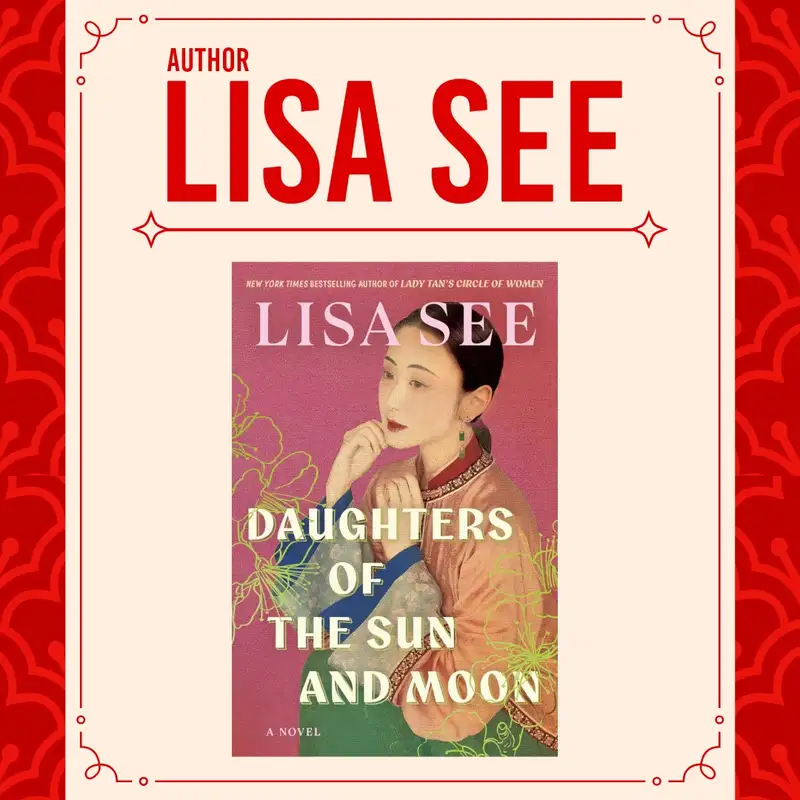
Bestselling author Lisa See joins Jeniffer and Chad Thompson to discuss her powerful new novel, Daughters of the Sun and Moon. Inspired by real women who lived in Los Angeles during the 1870s, the novel explores friendship, resilience, identity, racism, and survival against the backdrop of the largely forgotten Chinese Massacre of 1871.
Lisa discusses how her deeply researched historical fiction emerged from personal questions and themes she was grappling with in her own life. She explores why Los Angeles' violent early history has largely disappeared from public memory and how court records, photographs, and other historical documents helped shape the novel. Throughout the conversation, Lisa reflects on the importance of confronting difficult histories and what can be lost when we choose to forget them.
In This Episode:
Lisa See's Literary Brand
How friendship, family, and women's relationships became recurring themes across Lisa's novels
Why authentic storytelling creates a lasting author brand
The importance of writing from personal curiosity rather than market trends
The Inspiration Behind Daughters of the Sun and Moon
The true stories that inspired the novel's three main characters: Dove, a young bride brought to Los Angeles in an arranged marriage
Moon, wife of a prominent Chinese physician
Petal, inspired by women sold into prostitution who fought relentlessly for freedom
Why Lisa wanted to tell this story through the eyes of women
The Chinese Massacre of 1871
The little-known tragedy that serves as the novel's historical centerpiece
How 10% of Los Angeles' Chinese population was murdered during one night of violence
Why historians consider it one of the largest mass lynchings in American history
A Different Los Angeles
Why 1870s Los Angeles was considered one of the most violent towns in the American West
How the city's leaders later worked to erase this history
Lisa's theory about why Hollywood's rise contributed to the public forgetting Los Angeles' violent past
Researching the Novel
Examining original court documents at the Huntington Library
Discovering handwritten maps, trial transcripts, and historical records
Testing whether Chinese medicinal herbs could actually be grown on a windowsill, just as they are in the novel
Chinese Medicine and Cultural Traditions
The role of traditional Chinese medicine in the story
Lisa's personal connection to Chinese medicine and acupuncture
The symbolic importance of immigrants carrying soil from their homeland
Lisa See's Writing Process
Why she writes the final line of every novel before beginning chapter one
How the ending rarely changes, even when the journey does
Her unusual reading habit: reading the first chapter and the last chapter before continuing a book
Themes of Memory and History
The importance of remembering difficult chapters of history
Connections between historical anti-Chinese violence and modern anti-Asian hate
Why societies continue to repeat patterns when history is forgotten
Aphorisms, Wisdom, and Structure
How a poem by Lao Tzu shaped the structure of the novel
Lisa's lifelong fascination with aphorisms
The timeless wisdom that transcends culture and generations
 Guest
Guest