00;00;07;27 - 00;00;38;04
Unknown
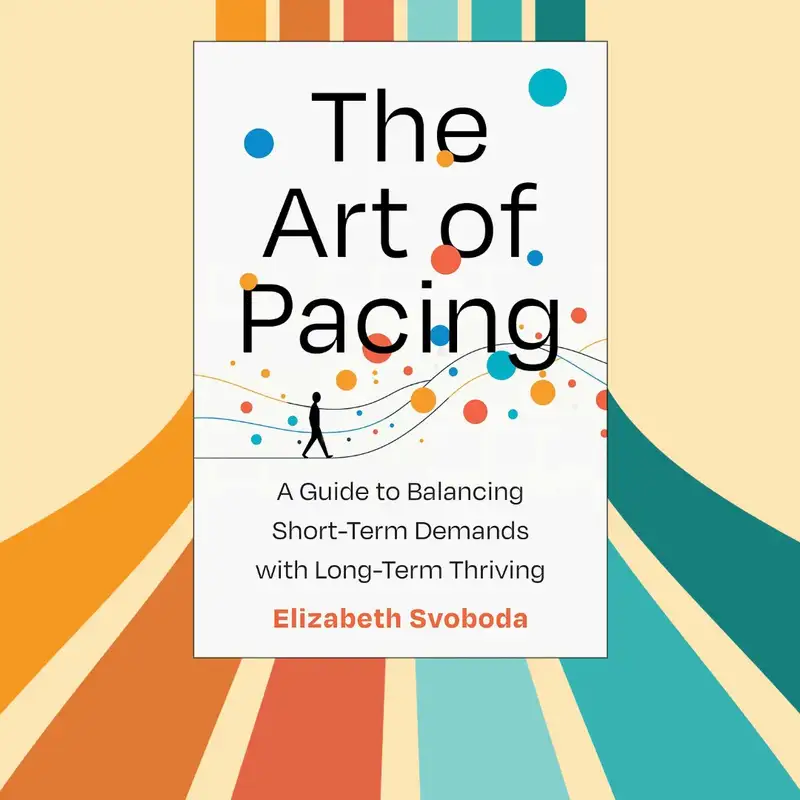
Hello and welcome back to The Premise. I'm Jeniffer Thompson and I'm Chad Thompson, and today we are here with Elizabeth Svoboda. She has written an amazing book that will change your life. I actually cried reading this book because it resonated so much with our crazy work culture that we have in America, and the book is the Art of pacing a guide to balancing short term demands with long term thriving.
00;00;38;04 - 00;01;05;15
Unknown
And it's so spot on. We'll get into that. But first, let me tell you a little bit about Elizabeth. Elizabeth's is an award winning science writer and contributor to Scientific American Greater Good, The Boston Globe, The New York Times, and other publications. She has received the Everett Clark Seth Paine Award for Young Science Writers, and her work has been anthologized in the Best American Science and Nature Writing series.
00;01;05;16 - 00;01;32;28
Unknown
She lives in San Jose, California with her husband and sons. Elizabeth, welcome to The Premise. Thank you so much, Jeniffer. It's great to be here with you. This is a real pleasure for us because Elizabeth is also a client and we've worked with her on her, her past books, working with her on her website. So I was so excited when you called me and told me that you had another book and you were ready to sort of revamp your brand, which we did.
00;01;32;29 - 00;02;07;18
Unknown
And folks, you definitely want to check out Elizabeth's website. Elizabeth Svoboda, you can look at the show notes to see how she spells that, but it's Svoboda O'Day and it's kind of fun to say Elizabeth Svoboda. That's right. I tell people, just spit it out. Spit it out. That's exactly right. And this book, like I said, like I actually cried a couple times when you were talking about, you know, this culture that we have created in America that is all about going, going, going, going.
00;02;07;19 - 00;02;32;19
Unknown
It's this 110% grind culture that's so resonated with me. And and like these moments of like intense flurry and then lethargic, like that feeling of I am staring at my computer, but I'm not actually seeing anything, and I don't think I can even lift my pen and feeling like there's something wrong with me.
00;02;32;22 - 00;03;11;15
Unknown
Yeah, no, I mean, I feel like we all feel like we're so alone in that experience, but that couldn't be further from the truth. If you look at the criteria for for burnout, one of the major things that you see with people is a lack of motivation. So when you are just kind of staring into the middle distance and you just cannot get up the gumption to get up off the couch, some mornings it may be because you're yeah, you're veering perilously close in that direction.
00;03;11;17 - 00;03;34;07
Unknown
And that is exactly if you found yourself there. That is exactly who this book is for, and it's to help you set a piece that feels more comfortable and more sustainable, so that you don't reach that space of languishing and wondering how you're going to get up the energy to go about everything you need to do for the day.
00;03;34;09 - 00;03;57;19
Unknown
Yeah, absolutely. And there is this moment where you were talking about, you know, time management and there's all these tools and there's books and they fly off the shelf. We're all looking for an answer to time management. And I sort of laughed out loud about this, because I do this every year where like, I reset, okay, I'm going to answer emails from 8 to 9 and then from 9 to 930, I'm going to do this.
00;03;57;19 - 00;04;23;27
Unknown
And then from this time, and it really works for me for like three weeks. That three weeks is actually really good. I give you a lot of credit for that, because usually when I try the time management and I've tried it to a really granular degree, like I have downloaded spreadsheets that have you plan your day down to the every half hour, or one of them might have been even down to the 15 minutes.
00;04;24;00 - 00;04;46;09
Unknown
And I just what I've learned is that that just sets me up for failure. It's such a brittle way to structure your day, because you put all this time into just setting up your calendar so perfectly, but the second there's some kind of curveball or even just a meeting run site, you feel like, oh my gosh, I have to go in.
00;04;46;11 - 00;05;06;02
Unknown
I have to recreate this calendar from scratch. I just have to reset everything. And honestly, the times that I've attempted it, I haven't been able to keep going for more than a day or two. That that's how hard it is for me. And I think a lot of people when they try this, really, I mean, it's very control oriented.
00;05;06;03 - 00;05;27;00
Unknown
It really is. Yeah. It is so enticing because it just holds out this promise of you are going to feel so on top of everything, and you do up until the day actually starts happening, and that's when it all tends to fall through. Yeah, yeah. No websites down and the servers broken. And like this has happened and that has happened.
00;05;27;01 - 00;05;55;11
Unknown
And yeah. And family things and like cat sick and whatever you you describe it as boxing yourself in and that's so true. You're putting all these parameters like I'm such a control freak and I, I've always been. And the funny thing is, you know, I should mention that you start out this book talking about marathon runners. You know, training for a race and how they have to pace themselves or they're not going to make it across the finish line.
00;05;55;11 - 00;06;25;14
Unknown
And I was a runner as a child, you know, up into my 30s, I ran every single day. It was sort of my sense of sanity. And so I just thought it was brilliant that you were comparing running to how we treat our work life, or even just our life in general. Right? I mean, the more time I spent talking to athletes, talking to coaches that work with athletes, not just physical skills coaches, but but mental skills coaches.
00;06;25;16 - 00;06;59;17
Unknown
I really got a sense of how smart they are about energy management, about really checking in with themselves more frequently, I think, than most of us do. Right. And oftentimes what that is, that that's sort of a process of reevaluation. You might have thought you were going to get through your entire workout in two hours, but, you know, 30 minutes in if you really just had an energetic wall, maybe you've got it on the fly, build in a 30 minute break and bump things out a little bit.
00;06;59;17 - 00;07;35;27
Unknown
And that's why the time management approach really falls through. And very few athletes are doing granular time management. They're doing energy management. For example, I was lucky enough to get to spend a day with AJ Wilson, who has held the world record for the 800 meter race. She does both outdoor and indoor track. She is just sort of the grande dame of middle distance running, and she really leans into this energy management.
00;07;35;27 - 00;08;25;09
Unknown
What she does is, first of all, and I think this surprises some people. She does one pretty much one workout a day when she is preparing for a major meet, and that workout will last two, 2.5 hours somewhere in that range. And and that is it. And she schedules that workout for the time of day that she knows she is going to be naturally just most alert and most energetic, which is sort of that mid-morning window before lunch, like not too early, but she doesn't really she doesn't pay any attention to exactly when she starts, you know, it might be ten, it might be 1015, it might be 1030, but it is sort of this
00;08;25;09 - 00;08;59;25
Unknown
big non-negotiable thing that she wants to get done during the day. Like she wants to get through this workout with the help of her coach and just just spending time with. I just thought we can really take a cue from that. Not not just, you know, dialing back from the way to controlling time management approach, but just aligning our most important, our most crucial work with the times of day when we know we're already naturally most prepared, most alert, most ready for that.
00;08;59;25 - 00;09;36;28
Unknown
And I put that into practice myself. And it has really helped me feel like instead of pushing the boulder up the hill to get through this really intense work, it feels a little bit more like rolling it down because, you know, you already have that natural, energetic push to help you get started. And I do sometimes, like as a writer, I'll set word count goals during that mid-morning session that I know I'm going to be most alert, and I often will find myself blowing past those goals at that time of day.
00;09;36;28 - 00;10;08;26
Unknown
Whereas if I try to do exactly the same type of work right after lunch, when a lot of us tend to hit a natural low, that is when it starts to feel more like pushing the boulder uphill. And, you know, it's surprising just I think a lot of traditional cultures have so much more respect and, and they heed sort of our natural energy peaks and valleys that we all have throughout our days, and we just tend to disregard them.
00;10;08;26 - 00;10;36;02
Unknown
I think we it's all part of the hustle culture, 110%. Like we should be able to do whatever we have to do idea at whatever time of day it falls into our laps. And I just think that really it is not serving us, and that by working with our natural rhythms, we can really get through our days a lot more effortlessly.
00;10;36;04 - 00;11;03;27
Unknown
And that really is American culture. You know, this idea of pulling yourself up by your bootstraps and working hard and pushing against the grain and never giving up. You know, the gospel of never letting up is how you worded it in the book, which I thought was so appropriate. Yes, yes, that is exactly true. And what surprised me was how early I think that started in American history.
00;11;03;27 - 00;11;25;12
Unknown
There was the beginning, I think. Yeah, like there was a writer named Alexis de Tocqueville, and he was French, and he came over to America, I think it was in the early 19th century to sort of get more of a taste for this new country. And what he noticed right away was, wow, you know, Americans are really motivated.
00;11;25;12 - 00;11;58;17
Unknown
They're doing great things. But he said, they really have this kind of tunnel vision where they get so focused on moving in a particular direction, on that kind of very narrow achievement that they kind of don't look at anything else. They they don't really appreciate the other aspects of life in a more integrated way. And I think we continue to have that tunnel vision today, especially within certain work cultures, within certain professions.
00;11;58;17 - 00;12;23;28
Unknown
I think it's especially prominent. But just in America, you notice that so much more than, for instance, in France and in Europe, where they have, in my experience, much more of an appreciation for for other aspects of life, like if you go to a dinner party in France, the first question that people ask you is not going to be, what do you do?
00;12;23;29 - 00;12;47;13
Unknown
Where is it? I feel like it. Almost any American gathering, it's like, oh, hi, nice to meet you. What do you do? You do? Yeah. Yeah, yeah. Like, what's your thing? And. Yeah, just noticing that difference. And it had just been my default for so long asking people like what do you do? What's your career like. And that is just not the be all and end all of everything.
00;12;47;13 - 00;13;09;17
Unknown
And recognizing that I think, is a really important part of starting to set a more comfortable pace. Chad, what do you do? Well, that's a good question because I don't really have an answer for that. In fact, I for decades of my life I have absolutely refused to ask people, what do you do when meeting? Good for you.
00;13;09;18 - 00;13;25;01
Unknown
Good for you. You always ask. I always ask them, what do you do for fun? Right? Yeah, because that's going to spark a much more interesting conversation than what they do for a living, because the vast majority of us are stuck in our 9 to 5 is, yeah, just trying to get through the next day. And it's like they want to talk about it on our off time, right?
00;13;25;02 - 00;13;43;25
Unknown
Yeah. It shouldn't define you. It's true. I can remember one time being at a party and someone asked Chad, what do you do? And he said, whatever I want. I love that I need to have good answers like that in my back pocket, like the zingers that you can deliver. And the look on this person's face was like, whoa.
00;13;43;26 - 00;14;10;06
Unknown
Like, I don't know if they were jealous or just totally stupefied by, like, what? Yeah. Yeah, exactly. Whereas, I mean, much more interesting questions would be, what have you been reading lately? What kind of impact has that had on you? And, you know, the kinds of conversations that your podcast is starting? I think when we're meeting new people, it's much better just to jump into those kind of conversations right away.
00;14;10;06 - 00;14;30;01
Unknown
I think a lot of us want to get to the the meat of social interactions, rather than spending all this time on the surface, and it's really very smart how a lot of people have learned to to get right to the heart of that. And I draw inspiration, Chad, from what what you do, as well as people in Europe who couldn't care less.
00;14;30;02 - 00;14;52;02
Unknown
You know what people do in their 9 to 5? Well, and I think it goes back to American culture, that our worth is really based on our work and winning. You know, like, yeah, I have there's this statement I forget what pages on. What were we going to say? I would go back even farther. Yeah. We are a country that is founded upon religious fanaticism.
00;14;52;06 - 00;15;18;13
Unknown
And the devil will. Here we go for idle hands to do. That's true. And that has carried through the entirety of of, you know, up to where we are now. Well, it's a moral failing to not be busy. And, you know, in many, many ways. Yeah, it's very much the Protestant work ethic and the idea that you can keep damnation away by putting your nose to the grindstone, that's a really good way to put it.
00;15;18;13 - 00;15;40;01
Unknown
And even those of us today who aren't religious, we don't realize the extent to which we've inherited that and in some cases are perpetuating that with the people that we supervise at work with our kids. So I think that the first step is becoming more aware that that is where it's coming from, and that there are other choices.
00;15;40;01 - 00;16;03;16
Unknown
That doesn't have to be your default anymore. Yeah, yeah. And there's this refrain in your book where you mentioned that a friend of yours, I think it was a friend of yours, their parents wrote in their annual there. I think it was high school annual. Every morning, gazelles wake up. It knows that it must run faster than the fastest lion, or it will be killed when the sun comes up.
00;16;03;17 - 00;16;46;02
Unknown
You better be running. Yeah, that that is exactly right. That's like. Wow. You know, and when I first read that, it didn't surprise me at all that somebody would put that in their yearbook is an inspirational quote as a good. Yeah, yeah. Because that was the system that I grew up in two. And you were just especially if the powers that be, if the teachers and the club advisors and all of that, if they thought that you had potential, it was just assumed as a baseline that you would put everything you had into it, especially as you're trying to build up this resume to get yourself into college.
00;16;46;02 - 00;17;13;23
Unknown
And I'm sure that if anybody had asked me about pacing myself when I was a teenager, the concept would have seemed completely alien. I would have just thought, you know, are you talking about athletics? What are you even talking about? Because while I had a lot of teachers, I think, who encouraged me academically and said, you know, go for it all, the sky is the limit, that kind of thing.
00;17;13;26 - 00;17;42;12
Unknown
I didn't really have anyone on the other side of it who is encouraging me. Maybe think about why you're taking on all of these things and what that means, like what you feel you might get out of it, rather than just having it be another little gold star thing that you can paste on your your resume. There wasn't really a lot of focus on doing that kind of distinction.
00;17;42;12 - 00;18;04;07
Unknown
And sometimes I look back and I'm like, what would my adolescence or my young adulthood? How would that have been different if I had been raised with more of a pacing philosophy, or just even to pay attention to that a little bit? Yeah, it's like one or the other. Either you're winning or you're slovenly. I had a boss one time.
00;18;04;08 - 00;18;23;12
Unknown
I don't remember if he told me the story or if I witnessed it, but someone said to him, well, don't work too hard. And his answer was, why do you want me to get fired? And that really stuck with me. Like, you know, I had to work hard, and I've spent my entire life trying to work harder instead of smarter.
00;18;23;12 - 00;18;52;10
Unknown
And that's exactly what your book is about is. And in fact, there's that study that you mentioned in your book that Stanford research shows that people who work more than 60 hours a week don't actually get any more done than people who work 40 hours a week. Right. There really are these diminishing returns past a certain point, like once you're working more than 40, 50 hours a week, you are not going to be all there physically, mentally during the number of hours beyond that.
00;18;52;16 - 00;19;20;25
Unknown
Now, there are certain professions that like if you're a surgical resident, you're in training. Maybe you technically have to put in 80 hours a week and that that is the absolute minimum. But the limits of human focus and just mental limits mean that you cannot be at your best during that entire time. And even if you try, you are probably not going to succeed because you are going to be so tapped out.
00;19;20;27 - 00;19;52;27
Unknown
We don't want our brain surgeons exhausted. Exactly, exactly. And it's just. Yeah, it's the culture. Yeah. And I think you mentioned, correct me if I'm wrong, but like, there's like a five year burnout period for most surgeons because of the. Well, it's just it's so common. And especially during the pandemic, I think that intensified even more because there had already been this baseline in medicine of people being expected to perform beyond their capabilities.
00;19;52;27 - 00;20;25;14
Unknown
But that really cranked up about 4 or 5 fold. And so what happened is you have all these people leaving the field who have all this amazing knowledge, all this expertise that is just sort of lost to all of us because we push those people to be on their breaking point. Yeah. A good friend of mine is a is a nurse and she's worked, you know, in the nursing field for probably 25 years, and she's been burned out for 20 of those years for sure.
00;20;25;17 - 00;20;51;15
Unknown
For sure. And she, you know, she will switch places or go into something slightly different. And but you know, she also loves nursing. And that's the sad part, right. Is the thing that she's passionate about is also killing her. Right. I mean that's what happens. And often what we don't do is when we do burnout, give ourselves enough time to fully recover.
00;20;51;17 - 00;21;27;19
Unknown
Maybe we take a couple of weeks off and then go back and tell ourselves that that's okay. But we really don't give ourselves permission to refill our energy stores fully. And what the research shows is that if you show up and you are in this kind of exhaustion that's characteristic of burnout, you are at great risk of still feeling that level of exhaustion years later if you do not give yourself fully time to recover.
00;21;27;19 - 00;21;47;02
Unknown
So I think a lot of us, yeah, don't really realize the ramifications of what we're doing to ourselves. Like if we do not take that retreat to fully recover to the point where we feel like we have our energy back, we have our motivation back, we're excited to do the thing that we fell in love with in the first place.
00;21;47;04 - 00;22;16;05
Unknown
If you never let yourself get back to that point, you're just going to kind of keep languishing along, maybe like your friend for. And that easily can happen for years on end. And a lot of us maybe are finding ourselves in that. And I think a lot of it has to do with finances. You know, how am I going to pay the bills and pay the mortgage and, you know, pay the the college tuition fees and all of the things that we find ourselves having to pay for and costs keep going up.
00;22;16;05 - 00;22;44;08
Unknown
So how do we find this, this pacing? Yeah, that that is exactly right. And the unfortunate thing I think in the US is we don't have really cultural backing for this idea that we do need to retreat in France. It's actually dictated by law that every worker needs to have at least five weeks of paid vacation. Oh my God, for a year where you were doing.
00;22;44;09 - 00;23;07;17
Unknown
And so that's why the entire country is able, like there are about half of them that take an entire month vacation in July, and then the other half take a vacation in August. And it's just like this big national thing. So they have real national backing for this. But if you don't have that, it is possible to carve out that time.
00;23;07;19 - 00;23;32;17
Unknown
While I was researching my book, I talked to a woman named Vanessa Gray. She was working in healthcare, and she was just absolutely at the end of her rope, and she just knew that she needed to take time for herself to retreat and to contemplate her next step, whether she was going to change professions or what she was going to do.
00;23;32;17 - 00;23;54;18
Unknown
But she just like, I need this time. But again, she didn't have this paid time off. So what she did for a couple of months, she really was careful with her budget. She saved up quite a bit and she kind of swallowed her pride a little bit too. And she reached out to family members for friends and to friends.
00;23;54;18 - 00;24;19;21
Unknown
And she was like, I really want to take this six month break. This is really important for me to decide my next steps. Can you support me? Can you help me out in this? And she did. Yeah. She she did get a little bit of support in that. And she was able to cobble together piece together this six month what she called sort of her self-imposed sabbatical.
00;24;19;21 - 00;24;51;29
Unknown
And she felt like I think during those six months, that was the first time in years that she felt like she was able to breathe and to think about, like, what do I really want for my life as opposed to, you know, just finding just the next quick thing that's going to pay the bills. And ultimately, what she ended up doing was entering a different career field that was more about urban planning, planning communities, supportive communities.
00;24;51;29 - 00;25;33;28
Unknown
And so really, as a result of that, that break that she scraped together for herself and took the time to do that. She embarked on a whole new career that is much more fulfilling than her previous career. And so I think don't underestimate the rewards that are going to flow back to you for years. If you take the time for yourself to take these breaks, to decompress and to really think about, like we don't have time to do most of the time in our daily lives to to think about what's the direction that actually makes the most sense.
00;25;33;28 - 00;26;01;07
Unknown
Yeah, for me, and I hope sometime in this country we get to a point where we do have cultural support for this, because I think what French companies and even executives have recognized is that these kinds of breaks serve everybody in the long run, because if you're a company owner, you end up with employees that are much more aligned with what they're doing and much more likely to be able to contribute for, for many years.
00;26;01;08 - 00;26;27;24
Unknown
And so I think that we're being very short sighted when we just kind of goad people into plodding along for years and years on end and just waiting for each day to be over so we can rest. And then then the clock starts all over again the next day. And it is plotting for sure. Yeah. One of the other things in your book that really resonated with me is, you know, when I do take time off, it's almost impossible for me to relax.
00;26;27;24 - 00;26;52;09
Unknown
And I think back to a time when Chad and I took a month off. Actually, it was a year we traveled around in our car, which was it had a kitchen in it. Yeah. Before van life was a bed. Before van life was a thing. In the early 2000, we took a year off and worked for a magazine, actually traveling around the country, and for one month we stayed with his dad in Iowa.
00;26;52;09 - 00;27;12;11
Unknown
And for the first two weeks, I was so restless and I was absolutely miserable because I didn't have anything to do but right. And that's what I wanted to do was right. You know, I have a whole month to write something, and instead I would like pace and I'd want to go do something. And like I finally settled into a rhythm the last week of that month off.
00;27;12;13 - 00;27;42;02
Unknown
And I was like, then I was kicking myself like, why couldn't I do this earlier? Like, but there's something about it that we don't allow ourselves to get into that rhythm. It takes time and we can't get enough for a weekend is not true. It's so true. Like I know for everybody. It does take time. There was one study on like longer breaks and how long it takes you to really feel rested once you start your break.
00;27;42;02 - 00;28;18;19
Unknown
And I think what it was was that it wasn't until the second week of a month long break that people really started to feel those highest levels of well-being and, and relaxation. So there's definitely it just takes time to make that transition, to sort of turn our work brains off. But I do think as you're sort of alluding to, it's even worse for those of us in the US, especially who were raised in this culture of you have to be doing something all the time or there's something wrong.
00;28;18;21 - 00;28;56;13
Unknown
And I think we can know intellectually that a break is good for us, that it's going to really help to sustain us over the long term. But it is so hard just to get out of that sort of jumpy monkey mindset of like, what should I be doing? Like I'm supposed to be doing something. And it's interesting to like when I was talking to athletes and coaches, some coaches told me, well, oftentimes high level athletes struggle against taking these breaks to because they are very driven, they are very motivated.
00;28;56;13 - 00;29;31;00
Unknown
They really want to go full speed ahead toward their goals, and they kind of couch it as well. You need to take some active recovery right now. Is there some sort of a rebranding effort? Almost exactly. Just sort of underscoring this point that it really is essential and you have to look at it as you're laying the groundwork for something that's only going to be able to come to fruition in your life if you take this time to stand back, to reevaluate and really do a kind of reckoning.
00;29;31;00 - 00;29;54;19
Unknown
And so I think if you think of it too, is you need to have this blank canvas in order to put something new on there and that it's really important, even if you feel squirrely for the first few days or even the first couple of weeks, stick with it, because it's so important to get to that blank canvas and you will get there, as I did get there.
00;29;54;20 - 00;30;22;07
Unknown
Yes. And you call it an inner aversion to idleness. And I was just laughed like, so true. I want to talk about something that happens with me. And I think people who have my type of personality that, you know, as a journalist, I create deadlines for myself, but they don't work unless there's an actual deadline, and I might have three weeks to get something accomplished.
00;30;22;07 - 00;30;42;19
Unknown
Right. And I tell myself, oh, I've got three weeks. Let's just say, for example, I'm teaching a class and I have to have the PowerPoint presentation ready. I'm so excited that I've got three weeks to do it, and then I will sit down to do it, and it just doesn't come. And it's just I can sit there for an hour and it's just my brain is just not clicking and it's not working, and I'll force myself.
00;30;42;19 - 00;31;15;01
Unknown
But then the day before my deadline, it all clicks into place as if it like just perfectly. And I'm like, okay, were the three weeks of trying, is that the reason this work? Or am I just literally the person who can't do things unless I'm under extreme pressure? Yeah. I mean, I do think a lot of us condition ourselves into that, procrastinating until the last minute, and then it almost feels like you get a little bit of an adrenaline rush right when you do that, right?
00;31;15;02 - 00;31;47;20
Unknown
I know I've had that experience with being on deadline for for articles and I mean, and I, I think sometimes in the moment I do sort of thrive on that adrenaline rush. It feels kind of good. But what one of the things that convinced me to stop doing that was just because I had sort of forced myself into this corner of going above and beyond and totally depleting my mental energy, my physical energy.
00;31;47;21 - 00;32;15;25
Unknown
Like after that, even for a few days, I would be in this languishing state where I wouldn't feel like doing anything and I would be completely unmotivated. So it made me realize, like when I do this, like, don't do anything, don't do anything, and then rush at the last moment, it really has an outsized ripple effect on me for almost sometimes it's like the entire next week.
00;32;15;27 - 00;32;44;02
Unknown
It feels like I'm waiting through muck to to get things done. And so it does motivate me a little bit, to get out of that. But I think we do need to sort of set up these little dopamine bursts, I think, for ourselves along the way. Like you're saying, I don't feel motivated unless I'm really up against a deadline, but we can sort of build these little rewards into what we do.
00;32;44;03 - 00;33;09;12
Unknown
Like, you know, if I work on this for 30 minutes, like, it doesn't have to be long chunks of time on on these days, I'd say it's three weeks before the deadline. If I do this, I'm just going to like, okay, this is embarrassing. But for me, it was like, I'm going to order this really amazing looking nail polish that I have been just, like drooling over, and it's totally overpriced, but I'm going to order it anyway.
00;33;09;14 - 00;33;36;28
Unknown
So it's just like setting up these little rewards, having these dopamine bursts. However, I mean, for some people is exercising like I'm going to do. It doesn't have to be a lot. I'm going to do 15, 20 minutes on this, and then I'm going to run around the block a few times. Yeah, yeah, that is, I think for me has been really helpful in getting up that motivation, even when you know you're not super close to deadline yet.
00;33;36;28 - 00;34;01;03
Unknown
And then when you get to that deadline and you actually are like 90% done as opposed to 10% done, you are going to be so grateful. And I think that gratitude sort of helps set a newer pattern in place. But like, I really don't want to go back to the way I was doing it before. And that's what you talk about too, is you've created these patterns for yourself.
00;34;01;03 - 00;34;29;08
Unknown
But we can break those patterns. I yeah, I want you to talk about HR baseline. You know, you talk about your heart rate monitor and how treating it like you're an athlete can actually help you understand your body better and make better choices. So talk to us about that. Right. So just for a little bit of definition, HRV, if anyone's not familiar, it stands for heart rate variability.
00;34;29;08 - 00;35;04;22
Unknown
And what that means is basically there's the greatest difference between the way your heart rate naturally speeds up as you breathe in and slows down as you breathe out. And what we know just from the studies and from the research, is that when there's a large amount of variability between that speeding up on the in-breath and slowing down on the outbreath, that signals that are nervous systems are in a more relaxed state.
00;35;04;22 - 00;35;43;23
Unknown
So and I'm not sure if you are a fitness device user, but for me, tracking my heart rate variability, I personally use and or a ring. But Apple Watch and other similar devices will allow you to do this, and it's more about looking at the trends over time. So if you are tracking this, and you notice that your heart rate variability is steadily dropping over the course of a week or even two weeks, that really is a warning sign to you.
00;35;43;24 - 00;36;13;15
Unknown
Maybe like a more objective warning sign than just feeling crappy that your energy reserves or your stress levels are probably getting higher, and that you need to make a pace adjustment or a course correction in order to start heading back toward more resilience and higher energy reserves. Very cool. Yeah, I love that there's something we can do. Like we can actually monitor it and pay attention.
00;36;13;22 - 00;36;49;09
Unknown
And I think you also talked about you can use the Hrvoje baseline for days or times during the day when you will probably be more productive. I'm not sure when you're more depleted. Like when when that variable. Did I get that wrong? Yes. Well, basically, like, are you talking about the chapter on modulation or this resonance frequency breathing that you can do when you find yourself like getting into a really activated state, like you're just feeling really, really frazzled and really stressed.
00;36;49;10 - 00;37;18;06
Unknown
Yeah. Yeah. Right. And basically how it works is when you breathe at what's called a resonant pace, which is the pace at which your heart rate variability is highest. And for most people, that's anywhere between 4 and 6 breaths a minute. And a good way to start is just there are these tracks on YouTube where, they will.
00;37;18;08 - 00;37;43;02
Unknown
It's like a video that helps you breathe in time. So if you want to breathe like five breaths a minute steadily for for 5 or 10 minutes, you can guide you on how to do that. Yeah. Okay. You train yourself. So basically you do this resonant frequency breathing. And if you really want to zero in on like what is your personal ideal resonant frequency trying different tracks on YouTube.
00;37;43;02 - 00;38;29;18
Unknown
You can try like the 5.2 breast per minute. And just like whatever piece in that range feels most comfortable is likely to be really close to your ideal pace. But and after you do this pace a few times with the track, your body is just going to learn it. And thereafter, like when you tell yourself to just breathe comfortably and focus on that, your body is just going to naturally launch into this breathing rhythm, and that is going to steadily calm down your nervous system for, I mean, and you can kind of titrate it based on the number of minutes that you're doing this breathing.
00;38;29;18 - 00;39;08;00
Unknown
And I had such an eye opening experience when I was researching this book, I actually I went to the office of Joe Arpaio, who's a psychiatrist that teaches people how to do this modulation, like modulating their nervous system activation. And he teaches his patients this breathing. So basically what he did with me is he clipped a heart rate monitor on my finger, and he had me breathe at my resonant pace, which is 5.2 breast per minute for I think it was about five minutes or so.
00;39;08;07 - 00;39;30;20
Unknown
And during this time I could see the heart rate tracings on the screen of his laptop. And, you know, they sort of started out kind of jagged. And even after just a couple of minutes, I could see them relaxing into these more sinuous like as shape waves. And that showed that my nervous system was starting to calm down.
00;39;30;20 - 00;40;00;16
Unknown
And at the end of that breathing period, Doctor Arpaio said to me, you know, if I had pushed an IV sedative into your arm right there, it would not have calmed you down as quickly as you just calmed yourself down right now. And that was really shocking to me, because I think what a lot of us do, like we read about these breathing exercises, we do it for maybe like ten or 20s and we're like, oh, that, that didn't work.
00;40;00;18 - 00;40;32;12
Unknown
You know, I guess that's not going to work for me. But the key is really like, stick with it for two minutes, three minutes, five minutes. That that's sort of the sweet spot. That's when you're going to physically feel the calmness starting to set in. And once you see that, once you get that positive feedback, it sort of motivates you to continue to the point where you feel like, okay, I'm ready now I can go have this difficult conversation or move on to my next task or whatever I need to do with my day.
00;40;32;18 - 00;40;57;13
Unknown
That's incredible. Yeah. So yeah, like five minutes between five minutes. Zoom calls could be all the difference. Exactly. Or I often will do it when I'm just sitting at a long red light waiting for it to change. And I should say to like I am a terrible meditator. Like, I know meditation works really well for a lot of people.
00;40;57;21 - 00;41;27;18
Unknown
I do not tend to be one of them, especially in the busyness of my day to day. But what I love about modulation, about doing this resonant breathing, is that I can be doing other things and doing the breathing alongside, like I can be chopping up ingredients for for dinner, asking, yeah, I mean, like, I can't maybe necessarily be having a conversation with somebody and still be doing it.
00;41;27;18 - 00;41;49;25
Unknown
So there are limits to to the multitasking. But if you're just doing normal daily stuff, unloading the dishwasher, picking up around the house, like you can be doing this and it can be having its effects on you, that's amazing. Yeah. And I do notice, like the more I push myself, the more my nervous system just feels completely out of whack.
00;41;49;25 - 00;42;10;24
Unknown
But just taking this simple walk and breathing and looking at the birds, I make it a point to not listen to podcasts. Or I try not to talk on the phone when I go for a walk so that I can be present in my body, you know, in the space around me. And it makes such a difference. And yet I will stall and I'll be like, am I going to go for a walk?
00;42;10;25 - 00;42;25;03
Unknown
Should I go for a walk? You know, I can have a glass of wine instead. You know, yesterday you stalled yourself right out of a walk. I did, I didn't do it. I had a glass of wine instead and it was terrible choice. It felt amazing in the moment. Like I'd really given myself something like a real gift, you know?
00;42;25;04 - 00;42;47;17
Unknown
But, you know, getting ourself over that hump to do the thing that's best for us is sometimes the hardest part, right? It's just like having that sort of activation energy to get yourself over the hump and just do the thing that even, you know, like 5 minutes or 10 minutes later, you're going to be so grateful that you did it.
00;42;47;17 - 00;43;09;01
Unknown
And yeah, I think a lot of it is just really habit setting. And sometimes it does help to sort of pick a time of day when you're going to do your walk, and then it's better to do it every day, because then you get into a mindset where if you're not doing it around that time, it feels wrong.
00;43;09;02 - 00;43;31;27
Unknown
Yeah, right. So true. And it doesn't take long for that to kick in. I'd say, you know, even just a couple of days and it's like, right. Yeah. You miss it. You know? I mean for some people it might be a couple of weeks, but but really, I mean, we know from this the studies on habit formation that once that is kind of inscribed in there, we will just keep doing it.
00;43;31;27 - 00;43;52;23
Unknown
And then the momentum works in our favor. And it's just something that it's easier to do it than not to do it. What do they say it takes how many weeks to set a new habit. I think it varies from person to person. For me, I do find it tends to be about a week. For some people it might be a little bit shorter, for some it might be a little bit longer.
00;43;52;23 - 00;44;18;29
Unknown
I don't know if there's an exact rule of thumb on that. That yeah, there may be some study that I haven't seen that really pins it down even more. Well, speaking of studies, you know, one of the things I love most about this book is a it's very relatable because you talk about your own childhood and always, you know, really striving to please others, to get good grades, to win races, you know, to get that gold star.
00;44;19;01 - 00;44;49;16
Unknown
And moving into adulthood, how this has affected your whole life. And then you also talk with so many people who are experiencing, whether it's burnout at work. But, you know, these personal experiences really brought it home for me. But then you move right into, okay, well, what can we do about it? What can we pay attention to? And you list like the I'm probably going to pronounce this wrong, but the Malek burnout inventory test that was developed by a Berkeley psychologist.
00;44;49;16 - 00;45;21;00
Unknown
So like, you give us, like, tangible things that we can actually do. And you just talked about modulation and resonant breathing. There's brief candles that are mentioned in the book, but this this book really does guide you through like there's hope folks, right? Yeah. I think my hope was to give people actionable, like approachable things that they might not have tried before because I feel like I'm somebody.
00;45;21;01 - 00;46;05;26
Unknown
I'm kind of a self-help junkie. I read a lot of these type of books, and you do tend to sort of hear some of the same advice over and over again about how to be calmer, how to be happier, how to be more fulfilled, and just putting this lens of how to set a more sustainable peace, a more comfortable peace, and that there things that you can do that you know, maybe trying one of them out may take 15 or 20 minutes the first time, but it's worth, I think, doing some of this experimentation and some of these tactics may work better for you than others, but I really do think that all of them
00;46;05;26 - 00;46;34;20
Unknown
are worth we're trying and worth experimenting with to help get yourself into a place where really you can sustain the things that you love to do for decades on end. I mean, I think that's where we all want to end up ultimately and be generative. Be yeah, leave a legacy not just in our prime working years, but really even as we get older, too.
00;46;34;21 - 00;46;56;18
Unknown
And to do that, we really have to start setting a more sustainable pace when we're young. Absolutely. And, you know, pacing really is an art and it's different for everyone. And that's the thing about art, right? It's it's it's subjective. Like what works for me might not work for you. And and it's I think it's important for us to acknowledge that, like, I'm also bad at meditating.
00;46;56;18 - 00;47;14;23
Unknown
And you said that in your book if you're bad at meditating. And I was like, oh yeah, that's me. But for me, if I do yoga or if I go for a run or now a walk, you know, that's my meditation, just breathing. And as you were talking about breathing, I found myself like taking really deep breaths and paying more attention to my breathing.
00;47;14;23 - 00;47;36;00
Unknown
And sometimes, sometimes that's all it takes is just paying a little bit more attention, you know? Right. And just sticking with it for a little bit longer than you think you need to, because we get so impatient, and even just sticking with it for two minutes might feel harder at first, but that's yeah, you kind of need to stay in there.
00;47;36;00 - 00;47;57;21
Unknown
It's not going to be enough to just do your breathing for like ten or 20s. That's not enough time for the biological results to kick in. Right. See, I personally am shooting for like the Stefan Saga Meister. So there's there's a graphic designer in New York City. I think he's originally Austrian, but he was big in the 80s and 90s.
00;47;57;26 - 00;48;16;12
Unknown
He's got a massive firm at this point, and his entire firm takes off an entire year. Oh, wow. Yeah. That's right. So it's a year on a year off. I remember when you told me that I was like, how? Like, how do we swing this? Yeah, exactly. Oh, my gosh, I think I need to talk to this guy because that is just revolutionary.
00;48;16;14 - 00;48;34;15
Unknown
I don't know if they still do it, but that was kind of the thing, like, like ten, 15 years ago that they were doing so well. Right. I'm wondering if writing this book has kind of given you a hope that people really do want to lean into this idea of deep rest, of reconnecting with their sense of meaning.
00;48;34;16 - 00;49;02;15
Unknown
You know, when you talk about storytelling and having a sense of meaning in the book, too? And did, you know, talking to all these people and doing this research kind of give you hope for maybe we can change as a culture? It definitely did. Just seeing people sort of organic response to the idea of pacing themselves, like, I'll just bring it up in conversation, whether it's with one of my sources for the book or just a friend that I'm talking to.
00;49;02;16 - 00;49;28;22
Unknown
And so many are like, I need to do that. I need to pace myself better. Like, when is this book coming out? Like, I need to. And so it really convinced me that there is a hunger for that, despite all the cultural currents that seem to be moving in the other direction, there is that hunger for it under the surface, and that we just have to sort of give ourselves permission.
00;49;28;23 - 00;49;53;17
Unknown
And if we're managers or give the people who are working under us permission to to take that space and and give ourselves that breathing room in a bunch of different ways, makes me happy to think that we could treat ourselves better, to be kinder to ourselves, you know, and and think about, you know, healthy selfishness as, as you talk about in the book, you also mentioned.
00;49;53;24 - 00;50;21;16
Unknown
Yeah. Go ahead. No, I was just going to be even if you are somebody who's really achievement oriented or really productivity oriented, this is going to help you too, because, right, you'll be more productive than you take these pauses. You were going to be more energetic and more productive during your on time. Yeah. Well, maybe I think you mentioned maybe we're changing from a world of martyrdom to an emerging concept of a culture of health.
00;50;21;18 - 00;50;49;02
Unknown
What a concept. Yeah, that was something a researcher said to me, and I can't take credit for that. But I thought it was a beautiful. Yeah, it was a beautiful notion. And it can feel like it's getting buried right now, right? I feel like the sleeping under your desk culture that Elon Musk and people like him sort of promote, that is really it feels like it's ascendant right now in this cultural moment.
00;50;49;02 - 00;51;16;02
Unknown
And here in Silicon Valley, there are some, I think, AI companies in particular, where they just really signaled people not to apply, and thus they are ready to work at least 70 hours a week. And that would be like the minimum wow. Baseline. And it just I mean, it's sad to me because people are setting themselves up for failure in the long run.
00;51;16;02 - 00;51;34;20
Unknown
It's really it's a form of self-sabotage. Yeah, yeah, I think most of those people are just in it for the, the early access to the stock. Yeah. So they can get they can get that money and then just get out. Well, and that's what they. Cause they do. Yeah. They get burned out. And so they do get out quickly.
00;51;34;23 - 00;51;55;23
Unknown
Yeah. I mean I think there's some of that. But for sure here in Silicon Valley there are and I have met them, there are people whose only mode it feels like is on. And so for them, being in that 70 hour a week bucket is like, it just feels like the water that they're supposed to be swimming in.
00;51;55;23 - 00;52;19;27
Unknown
Even though they don't do anything outside of work, they feel, you know, they don't really have a life outside of that bucket, but it's like they don't know any other way. They haven't experimented with any other ways. So it's like, okay, I guess we just keep going, keep forcing ourselves through this. Well, and like you said, that has long term repercussions.
00;52;19;29 - 00;52;52;04
Unknown
Yeah, it it definitely does because at some point you are going to burn out. And when you do that, especially if you don't allow yourself full rest in recovery, you may be stuck in that burnout state for years. You may. There's a possibility that you may never recover if you don't allow yourself to do so right. Well, and you also, you know, talk about how Covid sort of forced us collectively.
00;52;52;10 - 00;53;09;16
Unknown
Well, at least part of us there was part of the culture who were working more. And then the other part, you know, the other half of us who were forced to stay home and do nothing, which was hard. But eventually people started to get used to it. And now we're going back to this idea that you have to go back to the office and people are pushing back.
00;53;09;17 - 00;53;51;24
Unknown
They don't want to do it right. I think people got a taste of what it was like when their lives were not so overscheduled. And I actually talked to a number of people who, having that time that work from home or just be off of work for a while, time to think about what they really wanted, that ended up orienting them in new directions career wise, just like happens for people in France when they take that month off and they have time to hear themselves think, that is sort of fertile soil for for reinvention, for just finding a new direction that suits you better.
00;53;51;24 - 00;54;13;10
Unknown
And I think for people who have found that or who had a taste of that during the pandemic, I do have hope. There are a lot of people who want to recapture that, to hold on to that space, to to think, which is so essential to everything that comes afterward. I think Americans just need to learn how to protest like the French do.
00;54;13;11 - 00;54;39;23
Unknown
If they really want to pay for that, they're gonna have to learn to to dump a bunch of manure on, on, you know, whatever senator's lawn. Right? Well, that is exactly right. And funny enough, the way French culture is now came apart in large part through a bunch of political reforms that were pushed through in the 1930s when socialists essentially came into power.
00;54;39;26 - 00;55;05;27
Unknown
They were the ones that lobbied for this increased paid time off, and the ability for people to take an entire month off of work. And then so so I think sometimes the protest starts, changes that ultimately become woven into the fabric of the culture. And I do hope that we can touch off something of that here in the US.
00;55;05;29 - 00;55;28;08
Unknown
Me too. Yeah, yeah. All it, all it takes in France is just the just hinting at austerity major majors. And yeah, they just light up, right? I mean, they have lobbied hard for for what they have for the quality of life benefits that they have. And they are certainly not giving any of that up without a fight. Good for them.
00;55;28;09 - 00;55;39;28
Unknown
We could. Yeah. Take a lesson, take a page out of that. I just want better trolleys and the metric system. Is that so much to ask? Apparently that would be a good start. Yes.
00;55;40;01 - 00;56;11;16
Unknown
Well, Elizabeth, thank you so much for joining us here on the premise and just talking about the art of pacing and giving us hope for a really overworked culture that I, I think we can change. So I really appreciate you being here. Yes. Well, thank you so much, Jeniffer and Chad. I had a total blast being on with you and just talking about where we can take this and start excited to to continue this conversation on all levels of society.
00;56;11;16 - 00;56;37;06
Unknown
And it's one that we really need to have. Well, and congratulations to. It's a gorgeous book and it's so. Well, I mean, you're a fantastic writer. So this book is couldn't have been written by a better person. Thank you. Oh, thank you so much. You can learn more about Elizabeth at her website. Elizabeth Svoboda. Also follow her on Instagram at Svoboda.
00;56;37;08 - 00;57;05;25
Unknown
I'm going to spell that Svoboda e r and on Facebook. Elizabeth AA and on LinkedIn at Elizabeth Svoboda. This has been another episode of the premise. You can visit us online at The Premise podcast, and subscribe and rate or review the premise wherever you get your podcasts. Those reviews really help us get the word out and help people like Elizabeth sell more books.
00;57;05;26 - 00;57;18;18
Unknown
You can also follow me, your host on Instagram at Jeniffer Thompson Consulting, or follow me on Facebook at Jeniffer Thompson Consulting. Until next week. Thanks for listening. Goodbye. Goodbye.