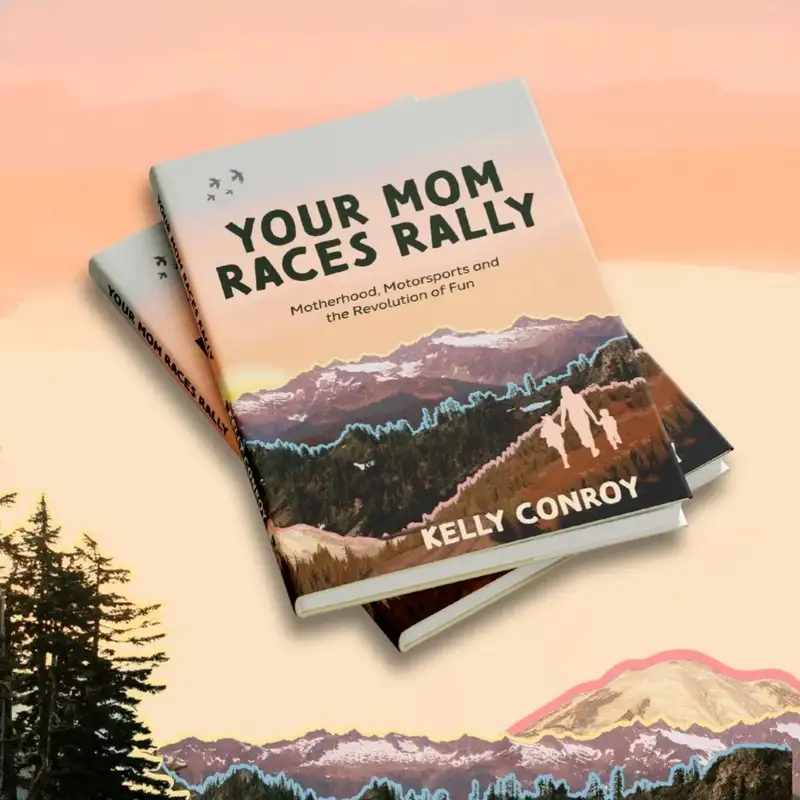
Jeniffer: Kelly Conroy is a writer, speaker, and nature
nerd. She is currently a matrescens educator
working to empower new moms and holds a bachelor's
degree in biological science from the University
of California, Davis. In her professional past
lives, she has worked as a duck biologist, which
I'd kind of like to talk about. Just, you know, if
we can fit that in, that'd be great. An
environmental educator and co founded a reclaimed
woodworking brand. Also very cool. Conroy, lives
in Sacramento with her husband, two kids, and a
race car whose name you will learn shortly. Your
Mom Races Rally is her first book. Kelly, welcome
to the premise.
Kelly Conroy: Thank you so much for having me. I'm excited to be
here.
Jeniffer: Oh, my gosh, I'm so excited to talk about this
book. I loved it so much. In fact, I cried
through, like, most of it. But it wasn't like,
it's not the kind of book where you know you're
crying because you're sad or it was just m. More
like so deeply touching in so many ways. There's
five parts and like, I cried in the beginning for
you, and I cried at the end because I was so
gleeful and happy for you and for this experience
and inspired. So well done.
Kelly Conroy: thank you. I'm so glad. Honestly, it's a weird
thing to say, but one of my biggest goals is to
get people to cry.
Jeniffer: That's.
Chad: That's not messed up at all.
Kelly Conroy: I think it's just like, it's so common for us to
be so disconnected from our feelings or honestly,
even, like, afraid to feel our feelings. And so
when I can get someone to. To be open enough to
actually cry and feel those feelings, I feel so
honored. And also, like, a big goal with my book
was to help people feel seen. and. And I think
when we feel seen, especially in our very, like,
vulnerable places that we tend to guard very
closely, it often comes out as tears. And so I
just think that's evidence, you know, that someone
is feeling seen and validated and, like you said,
like, touched in a positive way.
Jeniffer: And this book is very vulnerable. And I, can only
imagine, like, are you normally a vulnerable
person who puts it out there like that, or was
that hard for you?
Kelly Conroy: I tend to be pretty vulnerable. I think what had
to happen for me to write this book. Book, because
it is so vulnerable, I had to essentially imagine
that I was just writing it to myself, like, being
a witness to myself as I wrote it, because as soon
as. As soon as it was released and I realized,
like, oh, people I don't know personally are going
to be reading.
Jeniffer: You're like, oh, why did I do this?
Kelly Conroy: Yeah, I definitely, I definitely had a
vulnerability hangover. I'll say.
Jeniffer: Yeah.
Kelly Conroy: But I think it was really important to be as
vulnerable as I was and share as much as I did
again, to help people feel seen in those hard
parts that we tend to hide away, you know, because
we feel shame about it or we don't know how to
move through it or we don't have the support to
move through it. So I really just wanted to put it
all out there and, and say like, these are human
experiences and other people have had them too so
that people could relate if they, if they need to.
Jeniffer: Well done. And I want to jump into shame.
But before we do that, I want to talk to our
listeners a bit about this book. So your mom races
Rally, Motherhood, Motorsports and the revolution
of fun. So this conversation is going to start,
you know, around shame, which is how your book
starts out and the whole impetus for the entire
journey you took. But it ends in a really kick ass
way. So we're going to dive into shame now, but
hold on folks, we're going to go fast and tight
around those corners into the fun part real soon.
So I mean, opening the book with your shame and
sort of like your guilt really about taking on
something that was so just for you, it was hard
for you. Can you talk to us about why you chose to
start there in the book?
Kelly Conroy: Yeah, I really wanted to open up, I just wanted to
open immediately into the hard stuff because the
whole, the whole book, the whole idea honestly of
learning how to race rally cars as a middle aged
mom with like no motorsports background, no car
background, it was kind of a joke at first. And so
part of it was, you know, there's this silly
aspect of like, how ridiculous to be where I was
in life and to go after, you know, becoming a
race, car driver out of absolutely nowhere. And so
I knew that there was going to be this like, fun,
silly, playful aspect to it. But I didn't, I
didn't realize that in pursuing those fun goals I
had to really confront the hard stuff that I had
been just sort of stewing in for a long time. You
know, I couldn't just bypass it. I had to, I had
to really look at where I was in life and so that
I could move forward into something different. And
so I really just wanted to drop the reader into
like this was the middle of you know, just like
the emotion soup of all of the Hard stuff. All of
the. The fear, all of the things that were
basically, like, keeping me back, like, preventing
me from going after those things that I really
wanted. And so, yeah, I just wanted to. To kind of
drop them. Drop them in right into the middle.
Jeniffer: And at what point in the journey did you start
writing the book? Was it because I know that you
somehow brilliantly thought I should record all of
this, you know, and. And for posterity. So, like,
there's YouTube. There's YouTube. I think there's
YouTube, but there's Instagram videos, and, you
know, we get to see the whole journey, which was
awesome. But did you ever think to yourself, oh,
this might be a book?
Kelly Conroy: Yeah, I honestly have always said that I was a
writer. I have always written in different ways,
different forms, all throughout, you know, my
professional career. Even just when I was a little
kid, I just had journals and diaries, and I just
wrote and wrote and wrote, and it was really how I
expressed myself. But also it was how I figured
out what I was feeling and what I was
experiencing. It was like, a very powerful
processing tool for me. And so, honestly, from the
very beginning, I was like, oh, that would be a
cool story. And I was like, maybe it would be a
fiction story. Maybe it's a way I could, you know,
I can write this story and sort of live
vicariously. And then I realized, like, oh, no, I
actually need to do it. Yeah, yeah, yeah, I
actually need to do it. And so I. I did go into
the process imagining, like, what would it be like
to tell this story? And honestly, me recording,
like, the videos and everything, I started posting
on Instagram kind of on a whim, just because I
needed to really witness myself. Doing, was such
a, like I said, ridiculous goal. And. And there
were so many internal beliefs and obstacles that I
was having and external obstacles, honestly, and
challenges. And so I just wanted to have this
record of, like, proof that I was making progress.
And. And kind of just this record of, like, wow,
this is what's coming up. This is what I'm
feeling. These are the fears that are trying to
stop me from moving forward. And I think also just
with the effort of trusting that, like, whoever
needs to see it, it'll find who needed it, so that
people could see, oh, chasing dreams isn't always,
like, rainbows and butterflies. It's a lot of
shadow work. It's a lot of dredging up the hard
things and facing them so you can move forward.
So, yeah, I just wanted to record it and prove to
myself and prove to Whoever was interested that
it's possible.
Jeniffer: And it turns out people were very interested.
Kelly Conroy: People were very interested. Yeah, I, I still kind
of anytime I get on Instagram I'm like, what is
happening?
Jeniffer: Why?
Kelly Conroy: yeah, I, I honestly am surprised. I, I have this
beautiful platform and this wonderful audience of
people who are so supportive and so kind and have
sent me messages with just deep, deep meaning of
how they connect to what I have shared and, and
what I'm doing and how it has inspired them and
gotten them through dark times as well. And it's,
it's been really surprising and beautiful.
Jeniffer: I would think like, of all the things you could
choose, like rally racing would not be the choice
for building community and getting so much support
and touching people in such a deep way that really
has nothing to do with rally racing at the end of
the day.
Kelly Conroy: Yes it has. I could not believe the meaning that I
found in motorsport. Like there's, I didn't, I
didn't choose motorsports because I thought there
would be meaning there. I chose motorsports
because I thought it would just be like 100% fun,
kind of detached, almost like, like being able to
like dissociate from my life type of fun.
Jeniffer: you know, sure, yeah.
Kelly Conroy: but yeah, it turned out to really be so deep and
the meaning that people are getting out of
motorsports, which I went into thinking it was so
silly and so sort of surface level. But, but it's
this really deep sort like metaphorical activity
where people are finding deep community. They're
building resilience, they're building tools,
they're working through like difficult things in
their lives and they're doing it together with
other people. Yeah.
Jeniffer: And you wouldn't think that it would be such a
community sport, you know, cause you're alone,
maybe you have a co driver, but you're alone in
this car and it's loud and you're moving fast and
yet you're surrounded by people cheering you on
and you're not really racing each other as much as
you're, you're enjoying just the, the feeling of
being in the dirt. It sounds like.
Chad: I would think that, that of all of the motorsports
available, you.
Chad: Chose the poetic one.
Jeniffer: I agree.
Chad: As opposed to going fast and turning left.
Jeniffer: Yeah, that's true.
Kelly Conroy: Yes. Yeah, I do. I love hearing it described as
poetic because that's exactly what rally is like.
I describe it in the book in all these different
ways. Like rally is prayer, rally is meditation,
rally, you know, rally is, is dance. Like it's all
these things. But Poetic is such a perfect way to
describe it because there is the actual racing,
you know, which is in, in the scheme of, of racing
rally cars, the actual racing is the smallest
portion of time that you spend on the sport and
everything else leading up to it is working on the
car, building the car, meeting other people,
learning new things.
Jeniffer: Learning to drive a stick.
Kelly Conroy: Yes. Yeah, I had to learn how to drive a stick. I
had never driven a stick before. and, and also I
think it's just like a shared experience. You
know, in, in the world right now. We all are, are
so siloed and we're so in our individual worlds
doing our individual to do lists and going after
our individual goals. And rally is this beautiful
thing where it's, it's a team sport in the fact
that, you know, you have a crew, you have a co
driver, things like that. But it's also just this
collective community experience where every,
everybody is there because they love it and they
love it on a level that is so hard to describe,
where it just like gets into your body. It's this
very somatic experience. it's this like a
spiritual experience. It, it just hits all of the
planes of, I think, being a living being. And then
you get to just openly share that with everybody
else that's ah, at an event or at a race or just
interested in the sport at all. It's just this
immediate shared experience.
Jeniffer: So cool. And, and I loved how you reached out to
other women in motorsports and rally and you know,
they were so like accepting and wanted to support
you and be there for you. And men too. I mean, you
also reached out to men and that part of it was
really cool.
Kelly Conroy: Yeah, it was. Honestly, a lot of the people who
are included in the book reached out to me. and
before I was even like interviewing or researching
for the book, people would just send me really
nice messages on Instagram saying like, I'm so
proud of you. I'm also a woman. Like I'm also a
woman in motorsports and this has been my
experience. I also cried when I learned how to
drive stick. You know, all of these messages sort
of like, of solidarity and support and it just was
this immediate connection where I was like, can I
talk to you more about your experience and your
life? Like what led you to motorsports, you know?
Jeniffer: Right.
Kelly Conroy: Yeah, it's been really fun.
Jeniffer: So the book starts really, you know, you're,
you're getting ready to take this journey, but
then we take a step back to your experience of
being a mother, which didn't start easy for you. I
mean, you. I think it was six miscarriages you
had, and then. Is that right? Six.
Kelly Conroy: I had. I had two miscarriages, but, like,
infertility miscarriages, and then just two
absolutely horrible pregnancies.
Jeniffer: Okay, okay. So I don't know where I got the number
six, but the horrible part, like, cannot be
stressed enough because you had what is called HG
And I'm not even going to try and pronounce
Kelly Conroy: it, but, yeah, it's called, hyperemesis
gravidarum. Yeah.
Jeniffer: Good. Good for you. Thanks for that. And then
basically, like, you couldn't even sip water
without needing to throw up. And. Yeah, I mean,
that was. It was. You were just incapacitated.
There was. You. You imagine this joy and this,
like, beautiful experience. And I think all women
imagine that's how caring your child is going to
be. But it was so the opposite for you.
Kelly Conroy: Yeah, it really was the opposite. I. I knew from,
like, a pretty young age that I wanted to be a
mom, and so it just was a goal. You know, I talk
in the book also how about how it's like, I feel
like you're given this checklist in life where
you're like, go to school, check. start a job,
check.
Jeniffer: You know, get married. M. Check.
Kelly Conroy: Yeah, get married, check. Yeah. And then have a
baby, check. And so I was like, okay, have a baby
is definitely on my list. You know, And I
definitely believed this cultural narrative that
we have, especially in the US that motherhood is
the most natural thing you can do as a woman.
Right. It's what your body is made for. It will
come so naturally. You'll just have these
instincts, and they'll magically come to you. You.
Pregnancy is beautiful. And, childbirth is easy
because. Because it's what your body's built for,
you know? And so I didn't really give it a second
thought until it didn't go well. And then I
thought, you know, because I had been sort of sold
this idea my whole life that, like, well, that's.
This is what my body's supposed to be doing. And
then my body wasn't doing it very easily or. Well,
I took that as, like, a personal shame. I was
like, oh, well, there's something wrong with me.
Jeniffer: Right?
Kelly Conroy: And I didn't realize until years and years later,
when I became a, matrescence educator, that, oh,
it wasn't something wrong with me. It's something
wrong with those messages.
Jeniffer: Exactly.
Kelly Conroy: You know, like, yes, pregnancy and childbirth,
breastfeeding, all those things. Are natural
because they occur in nature. But natural and,
like, easy are not the same word. You know, they
don't mean the same thing. and. And it just, like,
it did not come easily to me. It was extremely
difficult. And I really sat, in the shame of that
alone for a long time, especially with my
miscarriages. Like, losing a pregnancy was not
something I was at all prepared for. And then when
it happened, I didn't know where to turn. Like, I
didn't know what to do. I just took it as, like,
another failure of my body instead of realizing,
like, unfortunately, miscarriage is natural also.
Like, that also happens in nature. And so I really
had to sift through that and find my community and
honestly find, like, the grief and rage that I
felt about having essentially been lied to about
motherhood being this, like, easy thing.
Jeniffer: I feel like every expectant mom should read this
book because you are so honest about it. But also,
you're absolutely right. So many moms blame
themselves and they have no one to talk to. They
don't even want to tell their own moms because in
their memory, their mom did it perfectly. So there
must be something wrong with you because you
didn't do it perfectly. And I've met and heard so
many similar stories like that.
Kelly Conroy: Yeah, it really is. And I think it's because we.
We sort of put this shame on women where, like, if
there's so much reproductive shame, you know,
like, if you get pregnant at the quote, unquote,
wrong time, there's shame on women, you
Jeniffer: know, if not soon enough, too late. Yeah, all of
that.
Kelly Conroy: Totally. Like, if you lose a pregnancy, that's
shame. That's, you know, if your kids are acting
out, that's shame on the mom. You know what I
mean? We are. Our culture puts so much shame on
women and on mothers. If you don't want to have
kids. Oh, my gosh. The shame that comes down on
women who choose not to have kids, you know?
Jeniffer: Yeah, yeah.
Kelly Conroy: and so I really. I think that that pushes women
into silence, right? The. The shame makes us tell
ourselves, like, oh, I'm the problem. I'm the
wrong one. I'm the bad one.
And so then we don't share and we don't reach out.
We don't process our feelings. And then that just
keeps every single woman that's experiencing those
feelings isolated and feeling alone. And so that's
another reason why I was like, I just went all in.
I was like, I'm going to share all of the shame.
I'm going to Share. Share everything. That was
hard because I want it to be more of an open
discussion so that women don't have to feel alone.
Jeniffer: Well, and this book is really like, you're an
advocate for healthcare, for women's rights, for,
you know, turning what is basically the patriarchy
on its head. And you know, we've been lied to that
women are supposed to do it all and do it well and
not complain. And like looking back into history,
like women have always done it. Like you used the
hunters and gatherers example, which I thought was
really poignant. That actually that's not really
true. We didn't really. Men weren't really hunting
as much. We were really, you know, it's different
than what we've been taught because it serves
capitalism.
Kelly Conroy: It does, Yes. I go pretty deep into the systems
that are supported by women being self
sacrificial.
Jeniffer: Totally.
Kelly Conroy: and yeah, especially in motherhood, right. We
praise the selfless mother.
Jeniffer: Right? Yeah.
Kelly Conroy: And, and like to be selfless just means to not
have a self.
Jeniffer: To lose yourself.
Kelly Conroy: Yeah, to lose yourself, to not be a person. And,
and we praise that even in, in girls, where girls
are socialized into being the caregiver, the
nurturer, the selfless giver. Right. The people
pleaser. And really that doesn't serve us, that
doesn't serve our children, that doesn't serve our
friends or the people that love us. What it does
is it reinforces these systems that are
essentially built on the invisible, silent, unpaid
labor, of women.
Jeniffer: Right.
Kelly Conroy: Like if the caregiving stopped, society would
stop. But as long as women are convinced to
continue doing this caregiving silently and in the
background and you know, basically gaslit into
being happy about it, then, you know, those
systems can keep profiting off of us.
Jeniffer: And you point out that you were gaslighting
yourself because that's what you thought you were
supposed to do.
Kelly Conroy: Yes. Yeah, it's very, it's this very like
insidious system where, the messages. It's not
like someone came up to my face and said, this is
what girls do, you know, this is what boys do. But
it's like I just had observed it and absorbed it
my whole life. Like there's just cultural
conditioning, cultural messaging that you just
absorb by living out in the world and in these
systems. And so what happened is I looked at the
world and I was like, okay, well that's true.
Right. My brain took that as like, well, that's
the truth. That's how things are. And so anything
that deviated from that was, had to be false.
Right. And so when in my mind I was like, well,
this doesn't feel right. Like something about this
doesn't feel right, then it again turned back on
me where it's like I. The shame of me being the
wrong one, me being the misfit, me not toeing the
line, me being disruptive or, you know, rocking
the boat, whatever it is. And so I really had to
gaslight myself into being like, no, you're
supposed to be a happy mom. Like, you're supposed
to be fulfilled by just taking care of your
children 247 with no breaks, you know, and so I
tried that for a long time. I was like, maybe I
can gaslight myself into being the good mom that I
remember, you know, being portrayed. And it did
not work. I really just gaslit myself into deep,
deep depression.
Jeniffer: And so now you have your first baby and of course
she's colicky, so she cries all the time.
Kelly Conroy: All the time.
Jeniffer: And doctors are like, oh, well, don't worry, it'll
end. And like, what did he say? Nine months? I
forget what the timeline was.
Kelly Conroy: Yeah, yeah, the doctor was just like, oh, they
usually grow out of it like in six to 12 months.
Jeniffer: And you're like, what?
Kelly Conroy: Yeah, yeah, she was like maybe six weeks, weeks
old. And I, I literally, I remember sitting in the
doctor's office and I was like, I will not
survive. Like, I cannot live like this for six to
12 more months. and that was a very real thought
for, for me. And yeah, it was a really, really
difficult moment.
Jeniffer: And this goes back to the, you know, the idea of
American capitalism that, you know, we're told,
and I'm going to quote directly from your book,
we're told, self centered sufficiency as a, as a
virtue and relying on others as weakness. American
capitalism thrives and toxic individualism. We're
asking for help means you have failed. So here you
are in this situation with a colicky baby, you're
postpartum, you're depressed, you've lost
yourself, your husband has to work so you can pay
the bills, you don't have enough health care and
you don't have a community to help. And we've
created this for you.
Kelly Conroy: Yes. Yeah. Oh, it's a very, it's a very
intentional that we are isolating mothers and not
investing in supporting or caring for them. And
it, I mean, it really just serves to reinforce
that spiral of like shame and depression and
isolation and suffering in silence and then just
being like, well, I guess this is all that I'm
good for, you know, or I Guess this is the place
I'm allowed to occupy now. And it took a lot of
energy for me to say, wait a minute. Like, it took
a lot of energy. And honestly, antidepressants,
to. To kind of like fight my way out of that.
Jeniffer: And then you did it again.
Kelly Conroy: And then I did it again. Which is like,
ridiculous. Yeah.
Jeniffer: but the beauty, that just proves that like the
beauty of your children is like so overpowering
that you're like, this time's going to be better.
You believed it again.
Kelly Conroy: I did. I. Yeah. There just was something where I
was like. And it took a long time. It took me
like, many, you know, like multiple years to where
I could kind of be open to doing it. And then I
did not write this in the book, but honestly, when
I, when I found out I was pregnant with my second,
I had a conversation with a friend where I was
like, is this what I want to do? Like, do I want
to put myself through this again? And my, my dear,
dear friend was so wonderful. And she was like,
you don't have to, you know, like I, I needed the
permission.
Jeniffer: Yeah.
Kelly Conroy: I needed someone to say, like, it's okay if you
don't want to go through that again. And honestly,
just hearing that, just knowing that I had kind of
like that agency.
Jeniffer: Yeah, yeah, that agency.
Kelly Conroy: Then it felt like, okay, I can make the decision
that actually feels right for me and not the one I
feel like I am obligated, to make. And yeah, and
at least the second time around, I kind of knew
that I was going to have hyperemesis gravidarum
again. And so I, you know, I set up the supports,
I had the medication, I had the in home nurse to
give me IV fluids, but it was still not great. And
it was during COVID I was gonna say.
Jeniffer: And then Covid, like, all of it was so sick
stacked, you know, crazy.
Kelly Conroy: Yeah, it really. And it's funny, like, talking
about all those layers on top of each other. I'm
like, man, women are so, strong. It is
unbelievable what women go through even. Even
without having children. The things that we go
through trying to survive, like in these systems
that are built against us. And at the very least,
like, not built for us, and at the very worst,
built intentionally against us. Like, women are so
strong.
Jeniffer: Amen, sister.
Chad: So what you're saying is that, rally racing just
isn't that tough?
Kelly Conroy: Yeah, yeah, yeah. I mean, rally racing is, is
honestly, it's so fun. It's And I think that's why
I went for it is because it felt like the opposite
of the day to day, just like, grind of trying to
survive, like, American motherhood and not. And
not my children. Right. Like, there's a separation
between my children and who they are and. And me
being their mother and me loving them so much. And
I'm so grateful to be in that role. I'm so honored
to be their mom. But there's a difference between
that and the role of being a caregiver within
American systems. Right. And those expectations,
like, that's a different thing. And those
expectations were just absolutely crushing me. And
so when I thought of rally racing, I was like,
that's so silly. Like, that's so ridiculous. And
it also was something that could be like, just
mine, you know, like, that, it didn't have to
involve my kids. I wouldn't have to be thinking
about doing the dishes or the laundry or packing
lunches or the school pickup schedule. It was
something that just seemed so freeing and so
empowering and so fun, and that's what really,
really attracted me to it.
Jeniffer: Do you have the book near you? Is it sitting
within reach?
Kelly Conroy: I do, yeah.
Jeniffer: if you turn to page 17, I would like you to read
one paragraph.
Kelly Conroy: Okay. Let me find 17. So cool.
Jeniffer: And it. So page 17, the second section, paragraph
two. Starting, with. I had chosen the most.
Kelly Conroy: Yes, Okay. I had chosen the most absurdly
outlandish goal I could imagine. A manifestation
of my vast backlog of self care and self
expression. For the past seven years, I had barely
been able to use a bathroom without my children
present, let alone pursue a hobby. I needed
something big, something jarring to catapult me
out of the cycle of overwhelm and defeat. And if
rally racing is anything, it's big and jarring.
Rally is drifting and sliding across dirt and
gravel. It's flying over jumps and speeding down
densely treed roads and alongside deadly
cliffsides. Rally is unpredictable, dangerous,
thrilling. Rally is all the things a mom is
scorned for. And that's what made it perfect.
Jeniffer: Oh, my God, I love that so much. And even hearing
you read it now brings tears to my eyes of, like,
excitement. I'm so excited for you in that moment.
M. I'm like, yeah, yeah, yeah.
Kelly Conroy: It really, it's. It's so much fun. It's. And it's
something where, again, like, the community of
motorsports and especially I think people that do
motorsports off road because there's something
like. Chad, you were saying, it's not just like,
getting in A car and turning left. It's like
unpredictable. You can't control the conditions.
You don't know what the road ahead is going to be
like. It's. It's really just this exercise in like
flexibility and open mindedness and resourcing
yourself with your tools and it's just so much
fun. And so I, I really, I'm, Like, I want all of
the people I know, I want everybody in the world
to try it and just see how much fun it is. Because
I think when we're having fun, right, like when
you have something that's fun that you're really
excited about or really interested in, like you
want to share it, right? You want to be like, oh
my God, look at this fun thing. You, you have fun
too. Like, you do it too. Because it's so
contagious. It's so. Just infectious in like the
best way. And that's how I feel about rally where,
at this point with my rally car, I have more fun
watching other people drive it than driving it
myself. Because just seeing the joy that it
brings, it's just like the best feeling to be able
to spread fun to other people and watch that spark
come back to life in them.
Jeniffer: Yeah. Well, there's this moment where Russ, you're
constantly like, oh my God, should I do this?
Should I do this? And you're literally talking
yourself into it and convincing yourself that it's
gonna be okay. And you're making a big decision at
this point in the book where you're going to drive
three days with your children, you're gonna rent a
trailer and go to this race up in Washington, an
enum claw. And you're like, I don't know. And Russ
is like, listen, no one's going to make you have
fun. Like, there's no fun police who comes around
to make sure you're doing a good job. We have to
do this ourselves. And we don't. We put it on a
back burner and you're like, that's right.
Kelly Conroy: Yes. Yeah. It's so easy to put fun and joy on the
back burner because it's. We're just like
inundated again with capitalism. We're inundated
with these messages that like, everything has to
be productive all the time. M. Like, you have to
be grinding, you have to be working, you have to
be. You have to totally exhaust yourself. Like,
everything has to have an ROI. Everything should
be 10x, you know, and so fun is. Is this, you
know, frivolous thing that we think doesn't have
an roi. We think it isn't productive. We think
it's selfish even to have fun.
Jeniffer: Yeah.
Kelly Conroy: especially when there's so much suffering
happening in the world, you know, it's. It's
really hard to prioritize having fun. And so,
yeah, we, I really questioned because it,
Motorsports are expensive and they're time
consuming. Yeah. And so it really was. I chose the
thing that was going to you, like, reallocate a
lot of our family resources back to me. And so
that came with a lot of uncomfortable feelings of
like, is this guilt?
Jeniffer: Like do.
Kelly Conroy: Is this actually against my values to be using
resources and time on me? or is that just a
narrative that I've been told you're not supposed,
as a mom, you're not supposed to use time and
resources on yourself, you know?
Jeniffer: Right, right.
Kelly Conroy: So I really had to look at like, what actually are
my values and is this values aligned? But at
literally every step of the way I had to confront
that and I would question it. And my beautiful,
wonderful, supportive husband, thankfully was
there and is there every step of the way for me to
externalize that process, you know, and to say,
like, oh, this feels crazy. Like, is this too
much? Am I asking for too much here to take this
like week long road trip, take the kids out of
school? You know, he had to take PTO from work.
We're spending all this money on hotels and gas
and race entry fees and all this stuff. And I was
like, is this too much? Like, how far can I take
it? You know, like, how much am I allowed to ask
for, basically?
Jeniffer: Right?
Kelly Conroy: Yeah, yeah.
And we just, I write about it in the book and it
just was this beautifully mundane moment where we
literally were just like flossing our teeth before
bed. And I ask him that and he just very casually
is like, no. Like, you know, fun is. Nobody's
going to make fun mandatory for us. Like, we have
to, we have to choose it for ourselves. And it
blew my mind because even though I had been. I had
spent a year doing this thing and going after fun
and, you know, confronting all these fears and
internal beliefs, and he just so easily was like,
no one's going to make us do this. Like, if we
want to do it, we have to choose to do it. And I
was like, whoa, it was such a big reframe. Like,
no one's going to make it mandatory for us. Right.
Like, bills are mandatory, taxes are mandatory.
Like all the boring, lame stuff is mandatory. And
so we had to really pivot our mindset to go
towards the fun.
Chad: Well, you see, this country that, we live in has
socialized males kind of to the point where that
is the default for us.
Jeniffer: Right.
Chad: We're expected to, you know, go out and buy our
bass boats and tow
Jeniffer: them behind our boat truck. Yeah, yeah.
Chad: So we're expected to be good consumers in the same
way that, you know, we've atomized, individuals.
Jeniffer: But women, on the other hand, are expected to stay
home and support. Well, and you mentioned in your
book too, like, it's totally okay for, for the
husband to be golfing all Saturday where. So that
the mom is still at home. She never gets a break.
Kelly Conroy: Right? Yeah, it's. It's such an interesting. I
feel like I have such an interesting viewpoint or
just perspective on that because my husband, first
of all, doesn't go golfing every Saturday. But he,
he's so supportive of my goals and my dreams and,
and really because he had seen what a terrible
time I had, you know, becoming a mother. We both
became parents at the same time. Right. but my m.
Life is. Every aspect of my life completely blew
up. And his life changed a lot too. Of course it
did. Right. but not nearly to the same degree. And
so he would have done absolutely anything for me
to get back to feeling alive, you know? but
really, it is so interesting to have his
perspective because the way that he moves through
the world is honestly just like, more easily than
I do. You know, everything is set up for him to
just kind of float, like. And not to say that he
doesn't work hard. He, he certainly does work
hard. but the challenges that he's up against are,
are not nearly as numerous or as heavy, I would
say, as, as the ones that I come up against every
day. And so it's been really fascinating to watch
him notice his privilege and to watch him be like,
whoa, I don't have to come up against that ever,
you know, let alone every single day. And, to
watch him really champion me and really realize
that society is set up to center people like him
and the effort that it takes for him to center me
instead, you know, for him to say, like, to know
that, like, if I think I write in the book that
like, he, he knows that I'm the center of our
family, right? I'm like the center of our little
familial. Familial universe. And if the sun goes
out, right, the sun being the center of the
universe, then everything is, Is gone. Right?
Like, it's bad for everybody if the sun goes out.
And so like him, like watching his process of
centering me and helping my light shine brighter
and then watching in real time the ripple effects
of like when my light shines brighter, it benefits
our entire family, like it benefits our entire
community. Because I have more to give to our
community. I have more to give to our family. has
been a really, really fascinating process.
Jeniffer: I loved how invested he was and Russ reminds me of
Chad because, as most of our listeners know, Chad
is also my husband in addition to my business
partner. And Russ did, which had does for me where
he just supported you and he was there, but he
also enjoyed it. Like he loved helping you build
out which.
What I want to say your car's name, but I think
you should tell people how what you named your
rally car. Tell us that little story real quick.
Kelly Conroy: Yeah, yeah. So the, the rally car that I have,
it's a 1985 BMW 325E, which is just a series of
numbers and letters that didn't mean anything to
me at the time. but yeah, it's like a 40 year old,
which I, I was born in 1985. So the fact that this
car is in 1985 just like really spoke to me. we
both are like these little middle aged gals just
trying to figure it out together. and it was not
the car that I intended to buy for rally, but it
just was this like intuitive poll when I saw the
listing. And actually Russ is the one that found
it and sent it to me. so yeah, she's this really
cool vintage BMW and, and we've turned her, we've
gutted her, we've just like turned her into a
rally car. and I thought for a long time about
like, what do I want to name this car? And, and do
I want to refer to it as she her? You know,
because, I have always thought it was really gross
when men did that. I was like, ew. You're like,
you know, it's a machine and you're controlling it
and you're telling it what to do. Like, it just
felt very misogynistic. but the deeper that I got
into it and the more I got to know the car and
rally, I was like, no, this is, this is feminine.
This is feminine in a way where it is so strong
and powerful and fluid and flexible and capable
and dynamic. You know, all of these, it's
creative, like all of these things that are very
like sort of the divine feminine, you know,
feminine with a capital F. aspects. And so I
Decided to name her Nessie after the Loch Ness
monster. because for one, the little old BMW is
like, she just looks like a little, like, lake
monster. but she also is just such a beast. Like,
she is so cute and so fun, but she is hardcore.
so, yeah, I named her Nessie. She's my little. My
little monster.
Jeniffer: I love it. And I love when Russ was like, he
looked at you and he's like, why? You're like,
yeah, she's a beast. That was so cool, cuz.
Kelly Conroy: She's a beast.
Yeah, yeah.
Jeniffer: And you're a beast. Like, you're a badass. Like,
you've allowed yourself to, to step through your
fear. And you said something really I found
wonderful and fabulous that all women need to hear
is like, you didn't get over your fear.
Kelly Conroy: Yeah, but, yeah, there's still fear.
Jeniffer: Right? But it doesn't control you anymore.
Kelly Conroy: Yeah, yeah, it's. It's just the perfect pun. And
so I kind of apologize for it. But also, it's just
too perfect to say, like, fear was in the dry
driver's seat. You know, like, fear in my life was
controlling the car. It was driving where I went.
It was informing all of my decisions. And I think
that's really common. And that can lead us, you
know, to, to dark places, or it can lead us just
to be kind of spiraling over and over and over
again. It can lead us to, like, living these very
small, unfulfilling lives because we're too scared
to do anything different. And my fear is still
very present. It's. It's still there every step of
the way, but I'm not afraid of it anymore. and I
think when. When your fear stops controlling you,
there's very little left that can control you. And
that's so powerful because now I can. I can
recognize my fear. I can recognize, you know, all
of my emotions for what they are, which is
information and experience and, honestly, data.
But I don't have to let that drive the decision
that I make moving forward. And I kind of think I
look at my emotions almost as children, where I'm
like, okay, you are part of me and I love you and
you have important information for me and I want
to validate you. Right. but you don't get to drive
the car because you're a child. that's my job. And
so you can come along for the ride. Right? I'm not
going to, like, kick you out. I'm not going to try
to run away from you. You can be here with Me. But
you don't get to be in control anymore. That's my
job.
Jeniffer: Nice. Very nice.
Yeah, And I love that you talk to yourself, too.
Like video and women. Watched what you saw so you
could better process the. What you were going
through and the change that was happening as you
took control and stepped into the driver's seat of
your life.
Kelly Conroy: Yeah, I'll say. This whole process, honestly has
felt like, really big, long therapy. Especially,
like the. My first hurdle was learning how to
drive stick. And, it was so scary for me. It was
honestly the hardest part of this entire journey
because. Because it was the first time I really
came up against that fear. And it was so loud and
so heavy, and it was telling me things like,
you're not allowed to be bad at something. You're
not allowed to fail. You're not allowed to make
mistakes. Like, who do you think you are trying to
learn something new at this point in your life?
You know, it just kept being like, go back to
being small. Small, small, small. Go back to being
scared. Don't reach for anything new. And so I had
to really decide, like, is this important enough
for me to push through my fear? And, yeah, I
recorded it because I. Of course, I stalled.
Everybody who drives sticks stalled. I still stall
my car. but stalling is this very physical
failure, right where you're trying. You know,
you're trying to do this new thing, and the car is
giving you all this weird physical and audio,
auditory, like, feedback, and then it just shuts
down, you know? And so it really. I felt like the
car really mirrored, like, the chatter that was
happening in my head, and I was so nervous, and,
like, my body was shaking and the car was shaking,
and, it was this really big experience. And so I'm
really grateful that I. I filmed myself
processing. Like, this is. This is what the fear
is telling me. And part of it was like, I said it.
I said some of the fears out loud, and it was so
silly. Yeah. you know where I was like, I had to
say out loud, like, okay, I'm not gonna break the
car. Like, stalling it is not gonna break the car.
And I was like, okay, I can kind of laugh at that.
You know, Russ can affirm, like, no, it's not
gonna break. And one of the fears was like, you're
not gonna leave me if I'm bad at driving stick,
you know? And I was like, what a. You know, what a
silly fear. Like, when you can externalize it and
look at it and be like, oh, that. That Is not
reality at all, you know, and it's easier to move
past. But then I got deeper into it, and some of
the fears really hit, like, very tender parts of
my heart. And it. It really pointed to, like, I
was afraid of failing. I was afraid of looking
stupid, honestly. I was afraid. Afraid of being
bad at something. And all of those fears had lived
with me for so long that I didn't even realize,
like, I wasn't. I wasn't trying new things. I
wasn't doing stuff because I was afraid of failing
or because I was afraid of trying, you know, being
bad at something. And so, gave me just, like, the
biggest boost in growth mindset because it was
like, oh, in order to get better, you have to
start by being bad at it. You know, you can't. You
can't just come out and. And that's just life in
general, right? Like, no one's born learning how
to drive stuff stick. No one's born knowing how to
even form words. Right? Like, everything we walk
around doing that we take for granted is a learned
skill.
Jeniffer: Yeah. Yeah.
Kelly Conroy: And so that means we can keep learning and keep
adding new skills. And what a beautiful thing, and
what
Jeniffer: a beautiful lesson you've given your children to
watch their mom go through this process and see
that it's okay. And I assume they saw you feel
fear and work through it.
Kelly Conroy: Oh, yeah. My. I. I have not hidden a single
emotion from my children in their lives. yeah,
they've seen me cry about it. They've seen me, you
know, shaky nerves about it. They've seen me right
before a race. They've seen me right after a race.
So they've seen the. Like, they've watched me move
through my feelings and still go after what feels
right for me and the. And still accomplish these
big things. my. My sweet daughter, she's eight
years old now. the battery had died in the rally
car recently, and she was like, I got it. Like,
I'm gonna. I'm gonna get the battery out. I'm
gonna. She was like, get me the tools. and she. It
was like this burst of confidence in an. In a new
area, you know, like, she's helped us work on the
car a little bit here and there, but she just was,
like, so empowered and so ready. Like, she didn't
even question whether or not it was a thing that a
girl could do to get the battery out of the back
of the car. You know, she just was like, give me
the tools. Here you go. Like, that's the Wrong
size. Like, give me a different one. Like, she
was, It was amazing to see how empowered and
confident she felt to, to try something new and to
just go for it, even though she didn't know how to
do it.
Jeniffer: Right, right. You taught her that. It's so
beautiful.
Chad: But did she take the positive lead off first?
Kelly Conroy: I made sure that she did. Yes. Yes. Yeah. Safety
first.
Jeniffer: You know, And I loved your parents too, their
involvement and, you know, what we get to learn of
them and the story. Because, you know, here you
are describing yourself as a broken human. Right.
So in a lot of ways, we would blame our parents
for being broken, but they just did what they were
taught. You know, their depression era parents
taught them, you know, to buckle up, to pull
yourself up by your bootstraps, all these
ridiculous individualism, you know, ideals that
aren't reality. And, and here you are taking
charge and they're so proud of you.
Kelly Conroy: Yeah, yeah. It, you know, it took some time, like
at first. And I think this is just like the
natural process of things. Like, you know, when I
first went to therapy and started digging through
this stuff, I. I was mad at my parents. You know,
like, I did blame my parents because I think
that's kind of the first thing you do when, when
you wake up to.
Jeniffer: It's their fault. Yeah, totally. They did this.
Chad: Yeah.
Kelly Conroy: To all these things. Right. but I have, especially
since becoming a mom, I have gained tremendous
compassion for, for my parents, for all parents.
Because, yeah, we, and for all humans, like, the
only thing we have to work with is what we're
given at first, you know, and. And from there it's
like we get to choose how we grow. And it has been
amazing. Honestly, my relationship with my mom has
been so beautiful always. But to watch her watch
me has been so tender and so loving and beautiful
because she is seeing these parts of me that I
felt scared to express or I didn't know how to
express, you know, when I was younger. Or maybe
they got buried, you know, underneath all of the
cultural narratives and stuff. And so she's
getting to see me be more fully myself, which is
all she's ever wanted from me.
Jeniffer: You know, there's a point in the book where you're
talking about how, you know, you learned how to be
a mom by watching your mom. And she did it so
perfectly. Like there was. She never complained.
The house was always clean, dinner was always on
time. Did you ever ask her, like, what were her
struggles? What did she hide to keep that facade
of that perfection for you guys?
Kelly Conroy: Yeah, I, it's interesting because I, I think
because of the way that my mom was raised, like,
that just was the expectation. And so I don't, I
don't know if, honestly if she has feelings about
it. I know, like, I've talked to her before. Like,
my dad worked so hard. He worked so much. Like, I
know that it was hard for her when he was gone. I
know that it was heavy for her to do all of that
work. but I think she kind of went into it with
those expectations. and I, I went into motherhood
with the expectation that, oh, I would still be
my, you know, like, girl boss climbing the
corporate ladder, like, you know, fully developed
life of adventure and fun. And I just. A baby
would kind of tack onto it and everything would be
the same, you know, because I was like, I knew I
was like, oh, I don't want to be a stay at home
mom. Like my mom was, you know, I want, wanted
something different than that. And so then when
that wasn't my reality, like, the, the friction
between my expectations and my reality caused a
lot of, difficulty. Whereas I think my mom went
into it, she did want to be a stay at home mom.
And so I think she went into it with, like, this
is what she expected and that's what she had. but
I do remember, you know, my, my dad being out of
town for work and this was like, you know, before
cell phones, before email, any of that. And he was
in, in the military, and so he was out on, a
military mission and just didn't come home when he
was supposed to.
Jeniffer: Right.
Kelly Conroy: And hadn't heard from him and had no way to get in
contact with him. And I remember her tucking me
into bed one night crying, because she was scared
and she was sad and she was alone and. And that
was a really hard moment for her. And it was one
of the. It's one of the first memories that I have
of my mom of being like, oh, she's a human being.
Jeniffer: Vulnerable. Yeah.
Kelly Conroy: Yeah. Like, she's a person and she, you know, she
does have struggles and she is going through these
hard things, even though she kept it all perfect
for us all the time.
Jeniffer: Thank God for moms.
Kelly Conroy: Honestly. Honestly.
Jeniffer: I want to talk about the last chapter, and I don't
normally do this because I don't want any
spoilers, but in this case, I feel like the last
chapter of this book is so poetic and so beautiful
and it's entitled we as in not me, but We. And
there's this story about this Space in this home
that you and Russ and your children live in and,
like, that you've always hated, and you resent the
space because you don't know what to do with it.
And you put a rug there, and then over time, you
realize that. That you and your family spend all
of your time on this rug in front of these two
windows or doors looking out into the yard. And
the kids play there, and even your friends, when
they come over, you end up, like, being down on
the floor, like, just in it. And it was such,
like, a beautiful metaphor for everything that's
happening. Like, instead of dictating and
scripting and staging something, you just allowed
it to be what it needed to be in that moment.
Kelly Conroy: Yeah, I. It. It was. I, didn't realize that until
I was writing the book, honestly, until I was
writing the conclusion, where I was like, oh, my
God, like, most of our life in this house has been
on that rug.
Jeniffer: Yeah.
Kelly Conroy: and. And when you walk in and when we bought the
house, it was just this empty, weird, awkward
space, and I was like, what's the. The purpose of
this space? Like, what do I put here? What do I
use it for? And it turned out being. You know, we
filled it with all of the other, like, messy,
organic, playful pieces of life that, you said,
like, aren't scripted, they're not staged, but we
have this physical space in our house that can.
That can be sort of, like a container that can
hold those things, and so we're able to. To fill
it with that. Whereas it's the same with life, you
know, like, when we are scheduling our entire day
down to the minute, there's no empty space for us
to fill with the. The unexpected, the curiosity,
the joy, the surprise, you know? and so, yeah,
this.
Jeniffer: The.
Kelly Conroy: The carpet is. Is this beautiful place where we
connect and. And we get to just have fun,
honestly. We have dance parties on that rug. We
play imaginative games on that rug. You know, it
really is. Ellie is our place.
Jeniffer: Ellie builds race cars on that rug.
Kelly Conroy: Yeah, she. Yeah, she just. Like, it came into her
mind where she was like, we were just spending
time on the rug, and. And she. It just popped into
her brain where she was like, I'm gonna construct
my own race car out of pillows. Like, just throw
pillows. And, she got construction paper out at
some point, and I watched her think through all of
the pieces and parts of a car that she has become
familiar with because of my race car. And she's
like, wait, it needs a gas pedal. Like, wait, it
needs A steering wheel, you know, and she, she
built out this whole like just imaginative car and
what a beautiful thing. Like she is not being
socialized to think like motorsports are only for
boys.
Jeniffer: Right.
Kelly Conroy: Or, you know, like, I can't build a car because
I'm a girl. You know, whatever the, whatever the
social scripts are that like keep motorsports so
male dominated. She just was like, she has seen
me, her mother, a, woman driving and building a
race car. And so she's like, well, of course I can
too.
Jeniffer: Of course. I cannot wait to see what Ellie and
Elder do, who they become as they grow older. You
know, being raised in such a beautiful open space
and open minded experience, you know, with you is
just a really cool thing.
Kelly Conroy: Thank you. Yeah, I'm excited too. It's, you know,
and it's hard because it's like, of course I still
make mistakes as a mom, you know, like I still
lose my patience, you know, all those things.
Like, it's, it's not that. And I think I write in
the book too. Like, it's not like rally fixed all
of the problems, you know, but it has given me
resilience and perspective and new tools and just
this beautiful outlet and, and this beautiful like
trust and belief in myself. Like, oh, I can
accomplish literally anything, you know, and not,
and not on my own. Right. But like with the
support, of my family and of my community and, and
what a beautiful thing. Like if we modeled the
world in that way, like, think of how different
the world would be.
Jeniffer: Absolutely. Have you ever heard of the children's
book Christina Caterina and the Box?
Kelly Conroy: I don't think so.
Jeniffer: By Patricia Lee Gouch. It is one of the best kids
books. And when I was reading that section about
the carpet and, and Ellie creating her own little
race car, I was, it took me back to my favorite,
favorite children's book, Christina Catarina and
the Box. And it's about this little girl who takes
a refrigerator, box and starts turning it into,
you know, race cars and boats. And you know, it's
like so imaginative and so playful and she can be
anything. And I think it's like kind of the
perfect kids book that encapsulates everything
that you went through and made it happen for
yourself in your book.
Kelly Conroy: That's amazing. I can't wait to read that and get
it for my kids. That's perfect. Thank you for that
suggestion.
Jeniffer: Absolutely.
Well, Kelly Conroy, thank you so much for being
here today and talking to us about your mom races
rally. I just, I love this book so much and I hope
all of our listeners rush out and buy it today.
Kelly Conroy: Thank you so much. I'm so grateful to be here and
I'm so glad that the book resonated
Jeniffer: with you a hundred percent. More than that, I love
it and I want to read it again. All right,
friends, I want you to go check out Kelly Conroy
on her substack at Wildly Frivolous. Fantastic
name. I realized we didn't even get to all the
things that that you're a duck biologist and a
nature nerd. But we'll just have it. Have to have
another podcast. Absolutely.
Kelly Conroy: Absolutely. I could talk. I could continue to talk
about ducks.
Jeniffer: So much to talk about. And also like, go check out
our Instagram account and look at the videos. I
watched them. You'll get to meet Russ a little bit
and you'll get to see the kids and it's just such
a beautiful story. Go back to the beginning. It's
Mom Races Rally. And of course you can buy the
book wherever books are sold, but we recommend
going to the publisher carrarabooks.com they are
doing amazing things in the book world and in
motorsports and so shout out to Ryan Zumalan.
This has been another episode of the Premise. You
can visit us online@thepremisepod.com and
subscribe and rate or review the Premise wherever
you get your podcasts. Those reviews really help
us get out the word for not only our podcast, but
also for Kelly Conroy and amazing books like this
one. You can follow me, your host, on Instagram
and Facebook at Jennifer Thompson Consulting.
Until next week. Thanks for listening and we'll
see you next time. Goodbye. Goodbye, Sa m.