Hello and welcome back to The Premise. I'm Jeniffer
Chad Thompson:Thompson. I'm Chad Thompson.
Jeniffer Thompson:And today we are here with Annabelle Gurwitch who is, well frankly, is amazing. And you'll find out why very soon. Her book, The End of My Life is Killing Me, is absolutely fantastic. But hold the phone, let me tell you a little bit about Annabelle before we dive into the book. Annabelle Gurwitch is an actress, activist and New York Times bestselling author of six books and a two time Thurber Prize finalist.
Jeniffer Thompson:Her essays and satire have appeared in The New Yorker, The New York Times, The Wall Street Journal and The Washington Post amongst other publications. Her books include The New York Times bestseller, I See You Made an Effort and You're Leaving When, New York Times favorite book for healthy living. Annabelle co hosted the fan favorite Dinner and Me, I'm sorry, Dinner and a Movie on TBS and was a regular commentator on NPR. She is a Jewish mother, lung cancer survivor and patient advocate, a terrible ukulele player I hear, and an unrepentant cat lady who lives in Los Angeles. Annabelle, welcome to The Premise.
Annabelle Gurwitch:Thank you. Thank you. It's just such always such a weird thing to hear your, your life in a bio, particularly when you've done a lot of different things like I have. I started out an actress, then I became, an NPR commentator, which led to publishing essays and the books.
Jeniffer Thompson:Right. Right. But you you know, my favorite part about it, which actually made me laugh out loud, was the ukulele player. Because I read the bio after I read the book. So it had special meaning.
Annabelle Gurwitch:Well, yes. As you as you'll see when you read the book, there's a story about and all the stories, you know, are about these very small gestures. These small strategies or I think of them as like small rescues or there's a Buddhist term, which is refuge, against despair. These but these little gestures. And and, in the book, I write about taking ukulele lessons with my two friends with the stipulation that we weren't allowed to practice in between, and we didn't have to get better.
Annabelle Gurwitch:And sure enough. You didn't. We didn't. At a certain point, it was you know, the teacher quit. We were so terrible, but it was such a freeing experience.
Annabelle Gurwitch:And the three of us became this like girlfriend throuple in in the most I I I'm all for whatever people want, but I just mean in a in a in a friendship way. We turned into teenagers. We now, the three of us, we twin, we like to buy the same clothes, and just like kind of this hilarious sort of return to childhood but not in a dementia way. I can't believe I'm making a dementia joke. That is awful.
Annabelle Gurwitch:We also worked together on something that my friend Jessica Hecht, that's one of the ukulele band members, started called the Campfire Project, where we create therapeutic arts programming for young migrants in refugee spaces. And we do writing and theater, and we also connect them with mental health services. But it's an arts respite for these young people who are caught in the immigration system. And honestly, it brings me so much joy to be their auntie in America and to to offer this small, we're not saving the world, this small gesture in this very difficult time. And that is actually the theme of the whole book.
Annabelle Gurwitch:So Yeah. Yeah. You know? And bad ukulele playing. Can't say enough about bad ukulele playing.
Annabelle Gurwitch:It's it's a it's a really restorative act to really play a musical instrument very poorly.
Jeniffer Thompson:You know what I loved so much about that chapter is I remember when the whole world went on Zoom at once and we were expected to get quality time with people who we really loved. And it was so exhausting like you say in your book you'd spend an hour with your friends and two hours recouping. But in person in your backyard with two other friends who happen to live near you, it would fill you and you would just like be buoyed by this time with them but Zoom is so draining but you somehow found a way to make it fun and to make it silly and to forget that you're in this you're staring at your friends through a box.
Annabelle Gurwitch:Well, know, this is another thing that I'm writing to in the book is about taking our perceived notions and sometimes even tropes of mental health or what is self care and then changing those expectations. So in terms of our ukulele, class that we took, which was on Zoom during COVID, it it was intended as a as a way of spending time together but not talking.
Jeniffer Thompson:Right. Or some talking, bantering perhaps. Yeah.
Annabelle Gurwitch:Right. Right. Right. But not but, I mean, not not talking like, ugh, the way, you know, when we were the the three of us had been, you know, talking, like, getting together once a week on Zoom to support each other. And, yes, as I said, it was, like, one hour on, two hours recovering.
Annabelle Gurwitch:But, you know, it was silly and fun and we just forget, I think when we are facing really big challenges. And you know, in my book, I'm writing to the challenge that was of course COVID at that moment, but also that I had been given this terrible diagnosis, health diagnosis, and I felt fine, but I live with this existential dread. So I'm living in a long term challenging situation. And you know, the funny and terrible thing is when I was writing this book, I couldn't have imagined the scenario that this would be such an important thing I think for people right now living through the time we're living in, where news is coming in all the time and it's like you're being pummeled. And it's hard not to want to either do two things, I think.
Annabelle Gurwitch:One is to crawl up and and in in the fetal position and never come out. Mhmm. And to disengage with the world. So how do I the question for me was, how do I engage in the world? How do I remain curious about the world?
Annabelle Gurwitch:How do I find joy under such circumstances? As I say, when your life starts reading like Samuel Beckett, you're, you know, in trouble. Yeah.
Jeniffer Thompson:And I love that you reference him throughout the book a couple times.
Annabelle Gurwitch:Yes.
Jeniffer Thompson:You know, I I just wanna tell our listeners that the end of my life is killing me is it came out on March 17 and it's just fantastic. Reading this book to me it was like being hugged by a warm snuggly blanket and sipping a cup of hot cocoa with extra marshmallows. Mean it's laugh out loud funny but it's also really warm. I mean, you're self deprecating but also empowering. And yes, your book is about dying, but actually no.
Jeniffer Thompson:It's it's actually not about dying at all. It's about living. And like like you said, it's I I think your book
Chad Thompson:Wait a minute. You lived?
Annabelle Gurwitch:I lived. Know. We were wondering. God. You're ruining the
Jeniffer Thompson:book. Yeah.
Annabelle Gurwitch:Uh-oh. Now we know the ending.
Jeniffer Thompson:Couple spoilers, folks. I'm really sorry. Yeah. But I think your book gives people permission to live and to stop being so hard on themselves and to step out of their comfort zones.
Annabelle Gurwitch:You know, this this is oh, thank you. And I just wanna say stepping out of your comfort zone. Yes. This is one of the themes of the book as well. And I just wanna be clear, I'm not someone who is like one of those people.
Annabelle Gurwitch:I I don't write prescriptives. I am giving you stories, and some of the stories of my trying things did not work out well. As it turned out, I'm the only person in Los Angeles who doesn't wanna get high and trip on ketamine. Did not enjoy that. I tried that.
Annabelle Gurwitch:But, you know, this idea of selectively stepping out of your comfort zone is something that I think is the road to curiosity. And and in a sense, you could say that this book is about living a curiosity led life, you know, because what I and not to sound too much like this is an overarching theory, but it is an overarching theory that I developed over the last few years, which is that when I was first diagnosed, I had this idea that I had internalized the message of carpe diem, suck the joy out of every day. You have to seize the day. And and that actually turns out to be a more western interpretation of the original Latin, which is translated more correctly as pluck the day. And, you know, this isn't semantics to me.
Annabelle Gurwitch:This is actually really, you know, life in action because what it did for me when I was seizing the day was exhausting. I went on the good the, the the goodbye trip to say goodbye to all my friends, and to see them what I thought might be the last time. I tried well, I did try to steal artwork from the hospital where I get care because I
Jeniffer Thompson:was like wanted to know did were were you successful in that adventure of yours?
Annabelle Gurwitch:No. Not at all. As it turns out, these hospitals are onto us because some some hospitals have really nice art collections, and it turns out they're, like, fastened to the wall, like, with they're, like, embedded in there. I tried twice. I mean, I'm not kidding.
Annabelle Gurwitch:Just just to make sure I wasn't, like, in a weakened state. You know? So I was like, well, art theft. I'm I'm not stealing. I'm liberating it for the people.
Annabelle Gurwitch:I mean, I I had a little bit of this sort of mania, this, like, seize the day mania that I internalized. And then what I realized is that this pluck the day was a kinder, gentler paradigm to live within and made me curious. And the way I think of it is that seizing the day made consumer of known pleasures. I only did what I thought I knew I already liked. Right?
Annabelle Gurwitch:Like, give me this, give me that. I'm gonna just take all these things in that I like. But if I am plucking the day, well, you know, like pluck, you know, like pick up, you know, stop and smell the roses kind of thing. But in a in a real sense, when I'm plucking the day, I that makes me say, well, I don't know what I like. Maybe I should say yes to sign on to travel with a heavy metal band in a van across Europe and work as their merch girl, which I did.
Jeniffer Thompson:Sex, drugs, and rock and roll memoir.
Annabelle Gurwitch:It's never too late to write your sex, drugs, and rock and roll memoir as
Chad Thompson:it turns out. Yeah. Yeah.
Jeniffer Thompson:I loved that chapter so much. I laughed out loud so many times.
Chad Thompson:Oh, I'm
Annabelle Gurwitch:so glad.
Jeniffer Thompson:So great. And I was like horrified, delighted, all of the emotions of the places you found yourself and like you were just so game, but also Jeremy, your love interest was so keen on like okay, you know, let's do this and we're gonna go find this. He just seemed like such a happy go lucky partner to have in that moment. This time when you're just doing like the most what people would consider to be kinda crazy to be a merch girl in a heavy metal band.
Annabelle Gurwitch:Yes. Well, it was it was I I really did not know what I was getting at
Jeniffer Thompson:so many I might add. If people don't know what writing bitch is, why don't you just tell them, Annabelle?
Annabelle Gurwitch:Writing bitch turns out to be not like a person who's writing, r, w r I t I n g, like a writing bitch. But a a writing bitch means you are riding on the hump of the seat in a little van. And as the smallest and least essential person in this, equation of the van, which I was squeezed between Jeremy, the guy I just started seeing who was the manager of the band, who was driving, and one of the band members, our our thighs were pressed together. I mean, was a tiny van. It was the most, you know, it's still sometimes like I I can't believe I did this.
Annabelle Gurwitch:I mean, we ended up in Paris because we had to work on the budget of this fledgling band. This was their first, tour of Europe. Some of them had never left the country. It was it was very sweet in in a sense if you weren't actually riding bitch with them. Yeah.
Annabelle Gurwitch:If you weren't in the van, it's very sweet. It's gonna be fun when they make the movie. But, you know, the thing is is that it was so improbable to end up there. I had this fantasy of, like, we're gonna be in Paris. It's gonna be like La Boheme, but a better ending for me than Mimi.
Annabelle Gurwitch:We're gonna be in this, like, Garrett hotel room with wallpaper, hot water and high thread count sheets, like, little bit nicer than La Boheme. But this we ended up in this hotel, this budget hotel. It had all the charm of of a row of a of a of Motel six. And, you know, it it was so It's
Jeniffer Thompson:not worse than a Motel six.
Annabelle Gurwitch:I mean There's nothing in Paris, there was a mister there was a mister coffee coffee maker in the room. In the city of cafes, this is, like, illegal. You you can't have
Jeniffer Thompson:That's criminal. Yeah.
Annabelle Gurwitch:A a mister coffee coffee maker? What? No. That's that's illegal. It was it was just unbel it was everything was like, what has happened to my life?
Annabelle Gurwitch:And you know what? It was because it was sort of this liminal time, time had stopped for me. And actually, literally, it had stopped for me because I I so didn't believe I was going on this trip that I didn't arrange for cell phone service. And also, my my phone company doesn't actually have that. Would have had to get a sim card.
Annabelle Gurwitch:I I wasn't organized enough to realize that. So I had no email. I had no phone service for a week unless we were at a stop with like a a WiFi service, you know. So I was basically in this vacuum, in a time warp. I was in Cameron Crowe's Almost Famous set in the seventies.
Annabelle Gurwitch:And it was this amazingly restorative trip because it took me by such surprise. This is another, you know, theme in the book is the idea of curiosity and surprise and allowing yourself to experience something new which actually takes a certain kind of vulnerability that is not always easy to come by. I think particularly when we are in extraordinary times or dealing with extraordinary challenges, we don't wanna venture out of our comfort zone. It can seem too like too great a vulnerability. And the way that I have countered that, and I have a piece in the New York Times that just came out, about what I call the bearable lightness of falling in deeply fond.
Annabelle Gurwitch:I couldn't start a relationship after having received this diagnosis of stage four lung cancer, this terminal illness that I luckily I've been stable for five years with this sword of Damocles hanging over me. But I couldn't I couldn't say I could fall in love, but I told myself I could make a small gesture. So first, I started this relationship being in it just for the sex. At 61, I'll just say. But it was just this this idea, like, I I could I could do it for just if I had the smallest and and no expectations of something large or love.
Annabelle Gurwitch:And then what has developed is I developed this idea, of and I I invented this sort of phrase of saying that I have fallen in deeply fond instead of falling in love, because deeply fond, is has a has a bearable lightness. And I so I have a piece in the New York Times about that, and that that what that's really about, besides the idea of taking a small gesture into love, is this idea of small joys. That when we are faced with large challenges, just take very, very small bites of joy. That that is that is in fact what I believe is the most restorative and most durable of joys. Not the big, we're gonna have this fabulous party, we're gonna you know, you you we're very focused on the extraordinary.
Annabelle Gurwitch:I one of the things I was reading about at the time that I wrote this book was the life of Matisse, the painter Matisse, and how after he had a terrible illness and a brush with death, he began what he called his second life. And in his second life, he left behind his phobist roots as a painter, an impressionist, and phobism. And that's when he did the works, the blue nudes and those cutouts. And he said that this his second life work was the work that was the most himself. He he felt the most alive, and that he had achieved the most in this second life.
Annabelle Gurwitch:He had been the closest to his own vision. Now I happen to love the work he did in his first life. Like, I'm not an art historian, but I love that. But I I love that he invented a new way of working because he could not paint anymore. He was well enough to work in the studio, but he had lost the ability to paint as he had before.
Annabelle Gurwitch:And one could imagine, you're Matisse, he had already become famous, world famous and revered painter. You lose the ability to do the work you have become known for. You could imagine him turning away from the world. You could imagine that he might shut down, but he didn't do that. No.
Annabelle Gurwitch:He invented a new way of living and a new way of finding joy. And I thought, that is one of the most inspiring stories and that that really keeps me going. I I I really took that to heart. And actually, I write a lot about art and how seeing myself through different paintings and eras of sculpture and painting through the years in my life has really buoyed my spirits over time. But they have changed the works that speak to me, and definitely different works speak to me now than they used to.
Annabelle Gurwitch:So, you know, that's another one of the restorative values I'm writing to is to not forget to turn to the ancient world and the ancient traditions because doom scrolling really will steal your brain, and I am very guilty of that. And I I you know, it's we have we live in a world of distractions, and so part of the book is about reclaiming attention and where to pay attention.
Jeniffer Thompson:Yeah. Yeah. Well, we're in a time that's just absolutely, stunning.
Annabelle Gurwitch:Assaulting is a very
Jeniffer Thompson:Yeah. Good
Annabelle Gurwitch:Yes. I just thought of it. It's assaulting to the senses. I feel pummeled all the time. And what can I do to find because the truth is, these things are actually happening?
Annabelle Gurwitch:So I'm not trying to in any way pretend pretend away reality. That is not a practical solution in anyone's life. Not that I am an expert on this, but I feel confident in saying you can't pretend away real problems in the world, problems that or let's say challenges in our lives. You know, these are these are my my goal has been to find ways to see things as they are and then find small joys to buffet against the storm.
Jeniffer Thompson:It's incredibly important to find that balance where, you know, you mentioned earlier, we don't wanna stick our head in the sand because we need to be paying attention. Yes. Yes. People need to be held accountable. Yes.
Jeniffer Thompson:But by the same token if we let it consume us then it doesn't help anybody, you know? And that's the beauty of this book is you're right it's not just about cancer or a diagnosis. I mean, the world has a cancer. We've all been diagnosed with this. We're not sure what's gonna happen, you know?
Jeniffer Thompson:Yeah. Or where we're headed, but it doesn't look good.
Annabelle Gurwitch:Well, engagement. How do I stay engaged? How do I find joy and add joy to the world in whatever level that is? And I really think, you know, we each of us has different opportunities. Some of us, we have a wider expanse in which to have influence on any given day, and other days and other lives give us different opportunities, you know, and we just step into that if we are able to, if we can summon the strength and vulnerability that it takes.
Annabelle Gurwitch:And I feel like I'm testing those limits, in the book and in my life because I want to stay engaged. And also engagement is how I fight, despair, you know. And like this this project my friends and I do with young migrants, call it the Campfire Project. You can find us on Instagram. We are we are working with a small amount of young migrants, but you know, we hope to bring in that small area of influence, some goodness into their lives.
Jeniffer Thompson:It's so cool. Yeah. Saw it on your website actually and I went and took a look at it. Beautiful thing. Know, the little things that we can do make such a difference, not just in other people's lives, but in our own lives, you know, in our own feeling and Yes.
Annabelle Gurwitch:It's it's so true. And you know, one of the things though that I have also found to be true in my experience in these past five years is that engaging in the world takes me out of my own, miseries which can be large. You know, when you are going through a tough time, divorce, any job loss. And I and as a freelancer my whole life and as a person who's been divorced twice, I can say I I have some experience in this. You know, anything where I don't have to be me, where I have a chance to have relief from the burden of self is a fantastic day.
Annabelle Gurwitch:One of the things I I do, you know, is, and and this Campfire Project grew out of that. I've been volunteering at my local high school for many years. Working with teenagers is my favorite volunteerism because and I say this as a mother as well. I the teenagers can be so fantastically entertaining. They are so dramatic.
Annabelle Gurwitch:You just like they can cycle through emotions in, you know, in an instant. It's you have to stay on your toes. You have to stay awake to them. And then when you're done, because they're not your children, they forget
Jeniffer Thompson:walk away.
Annabelle Gurwitch:You walk away. They forget you ever existed. It's such a it's so fantastic. It's it's it's like having children but better because no one calls you later to tell you they crashed the car. It's just so great.
Annabelle Gurwitch:It's it's a total immersion in, oh my god, teenage brain firing on all cylinders. You have to stay with them and then walk away. I I I love it. It has been and so I do this in a number of iterations, and some of them never learn my name, and that is fantastic. Could not be happier for that.
Chad Thompson:I'm guessing you're banking on your kid not listening to this podcast.
Annabelle Gurwitch:You know, what's what's fantastic is my child, he grew up with me, and we're actually very close, but, he doesn't feel he has to knee need to read or to listen to anything I ever say, that's not to him because, you know, I've never been at a loss for words, and he's heard enough.
Jeniffer Thompson:I like that. An honest relationship.
Annabelle Gurwitch:Oh, yes. Oh my god. He so funny. He came to see me perform the other day, and he makes him very nervous for me. He gets very nervous for me.
Jeniffer Thompson:That's so cute.
Annabelle Gurwitch:And, so I was performing at Joe's Pub, which is my favorite venue in New York. Right?
Jeniffer Thompson:Mine too.
Annabelle Gurwitch:I just love it there. So I I did my first play in New York at the Public Theater, so this is like my home turf. So happy. So friends of mine were in the audience. I was doing a show which you can listen to online and watch on YouTube.
Annabelle Gurwitch:It's called House of Speakeasy. It's authors telling stories at Joe's Pub. It's also a great organization that brings reading libraries to underserved communities, fantastic people. House of Speakeasy, find it. They're Love it.
Annabelle Gurwitch:Every great storytelling. Well, Ezra, my son, is in the audience. He's sitting with my friends. I come on stage, and they tell me the minute I come on stage, he slinks down in his chair, puts his hood hoodie over his head, and and accidentally it comes out, and he just says, oh, no. Then after the show, he goes up to me and he says the best thing that's ever been said to me in my entire life.
Annabelle Gurwitch:He says, mom, I want you to know that if anyone can take what sounded like a terrible idea and make it great, it's you.
Jeniffer Thompson:Thanks, son.
Annabelle Gurwitch:Yeah. I thought, okay. That is the most passive aggressive, fantastic compliment. I'm gonna take it. And what I'd done was, and you can see this online, that I tell the story of the uke band, and then my uke band comes on stage with me.
Jeniffer Thompson:Oh, yes.
Annabelle Gurwitch:And we sing we we a sing along of Rainbow Connection.
Jeniffer Thompson:I was gonna say. Rainbow Connection.
Annabelle Gurwitch:Oh my god. It was so much fun. You can see online all the joy comes through. It was hilarious and just just so much fun. And my kid witnessed that.
Annabelle Gurwitch:And I just if I wanna laugh, I just picture him slinking down. Oh, no.
Chad Thompson:Did he that's just the best. That's the best. I wish that you
Jeniffer Thompson:could have, like, cut to him as part of that
Annabelle Gurwitch:video. Oh, Yes.
Jeniffer Thompson:Oh my for posterity.
Annabelle Gurwitch:Oh my god. For the what's really funny, though, is that, it's, you know, it's a certain crowd that comes to see that show, and there were two young men in their twenties in the crowd. One was my son. The other was another young man, and, they knew each other because he was the son of someone else in the show, and Ezra and that young man went to Bard together.
Jeniffer Thompson:Wow. What are the chances? Right?
Annabelle Gurwitch:What are the chances?
Jeniffer Thompson:Maybe fun. Good considering the people you know.
Annabelle Gurwitch:Yeah. That is funny. Maybe. That is funny.
Jeniffer Thompson:That's cool. Well, we're gonna definitely look up house of speakeasy. Are you gonna sing along? Oh. Sing along the rainbow connection.
Annabelle Gurwitch:You just don't want me to sing. But, unless everyone else is singing, so pretend you hear me.
Jeniffer Thompson:We're all gonna sing along. We'll save this for later, folks. I wanna talk about your cover.
Annabelle Gurwitch:Oh my gosh.
Jeniffer Thompson:I happen to know I've I heard a story you told, so but I wanna share it with our listeners if you were expecting a different cover. Like, talk to us about this experience.
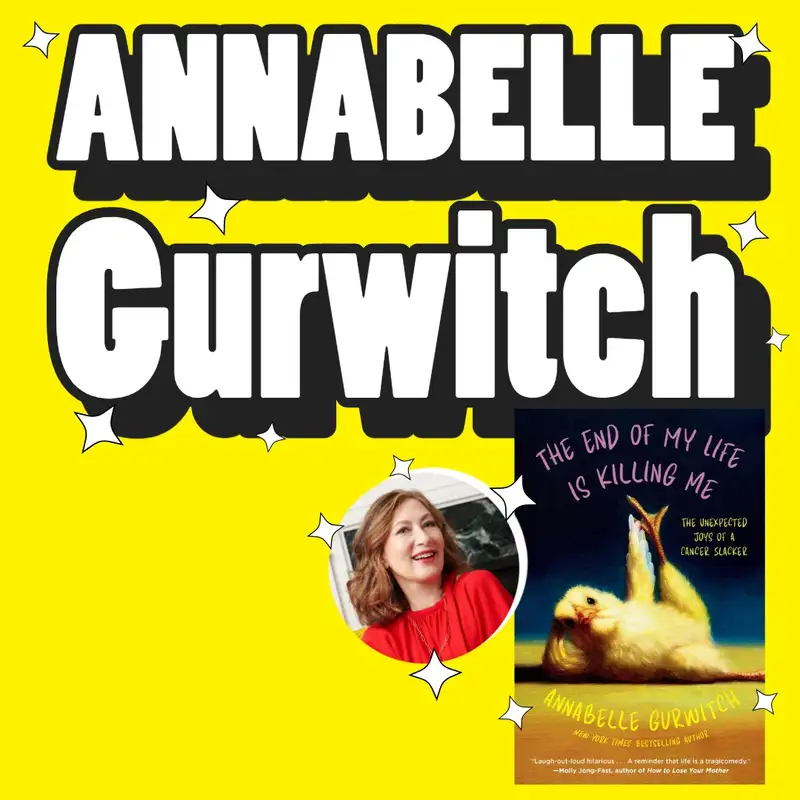
Annabelle Gurwitch:Well, I'm glad you asked because so if you see the cover of the book, it's a very memorable cover. There's a little chicken doing yoga on the cover. And
Jeniffer Thompson:Yoga? I thought that was a nineties stripper pose.
Annabelle Gurwitch:Oh, okay. It's there's a chicken doing a nineties stripper pose on the cover. Yeah. My my son has also said to me, mom, should that chicken be wearing pants? And
Chad Thompson:so we've we've been arguing about
Jeniffer Thompson:them. Underwear. I mean, come on.
Annabelle Gurwitch:That chicken's a little exposed.
Jeniffer Thompson:Let's face
Annabelle Gurwitch:it. So the thing is oh, I'm gonna cry with this story. It just kills me. So, in the book, you know, I was saying I write about art and my relationship to art, and I had become really, I'd fallen in love. I was gonna say, I was I've become fascinated.
Annabelle Gurwitch:No. I became obsessed with a statue by the Baroque master Bernini. And, it's a statue of Apollo and Daphne, or as I like to call it, Daphne and Apollo. Why? Why is Apollo listed first?
Annabelle Gurwitch:And, it's, you know, taken from Metamorphosis, Ovid's Metamorphosis and the story of Daphne transforming into a laurel tree. And I became really, that story became something that was a a guide for me in terms of Daphne as a figure in the Metamorphosis is the only character who undergoes a transformation, who exercises agency in the transformation. She calls out and asks to be transformed. Zeus turns, pirates into dolphins. There's, Hera turns a boy into a gecko.
Annabelle Gurwitch:There's all kinds of things like that, But not Daphne. She asked for transformation. And I started to feel like Daphne was some image for me to be guided by. So I knew I wanted to have Daphne on the cover of my book. I had picked out the statue focusing on her.
Annabelle Gurwitch:I had sent that to my to my publisher. I had found paintings interpreting the Daphne myth. It was You gonna were committed. Yeah. I was I've never I'm not good at covers.
Annabelle Gurwitch:I'm not good at artwork for books. This I knew. It was gonna be Daphne on the cover. Well, my publishers tried it a few times. I liked it.
Annabelle Gurwitch:No one was going for it. And I happened to be standing in Barcelona, Spain on the Rambla. I was attending a cancer conference. I got very involved in advocacy. My publisher said, we have a cover for you.
Annabelle Gurwitch:It's not what you're gonna expect, but take And a I clicked on the picture and no kidding. I this was a chicken doing yoga or stripping. I mean, I I was completely I burst into tears. And after three glasses of wine, I did what I always do, which is call my friend Nina, who's in my ukulele band, and I said, what has happened to my life? I've got a chicken doing yoga.
Annabelle Gurwitch:And she said, Annabelle, it's just funny. I don't even understand it, but it's really funny. Then I did what I always do, which is call my son, and he said, is there a chicken theme in this book, mom? Just and I'm standing there, and I realized, you know what? This is a message of the book.
Annabelle Gurwitch:You won Baroque masterpiece. Life gives you a chicken doing yoga. This is this is this is the absurdity. This is Samuel Beckett. This is waiting for good go.
Annabelle Gurwitch:Dough never comes. This is, this is Winnie in, happy days. She's buried up to the her neck in sand. This is so absurd. And so I just thought I I I texted back exactly what I didn't wanna say, which is I love it.
Jeniffer Thompson:It's perfect.
Chad Thompson:It's perfect. Yeah.
Annabelle Gurwitch:So yeah. So funny.
Jeniffer Thompson:I gotta describe it. So there is a baby chick. It's not it's not a baby chicken. It's a baby fluffy, adorable baby chick doing, okay, yoga or, you know, a nineties stripper post, whatever.
Annabelle Gurwitch:Is gonna
Chad Thompson:be the nineties?
Jeniffer Thompson:I don't know.
Annabelle Gurwitch:It just because there's something better, Chad. Yeah. There is something
Chad Thompson:something showgirls existed?
Jeniffer Thompson:Because I haven't been to a strip club since the nineties? I mean I don't really know.
Annabelle Gurwitch:So Fair enough.
Jeniffer Thompson:The end of my life is killing me is in hot pink, you know, and and you know, it's just so funny.
Chad Thompson:Yeah. Totally get broke from that.
Jeniffer Thompson:It's completely unexpected, and that's exactly what this book is.
Annabelle Gurwitch:And that and that ultimately is, you know, what I really want is is to surprise you. And Mhmm. You know, it's a bait and switch. You think you're gonna get one thing, you get another. And that is you know, yeah.
Annabelle Gurwitch:When Jeremy, my my now partner said, would you like to come with me on a European tour? We'll go to London, Amsterdam, Prague, and Paris.
Chad Thompson:Sounds so exotic. Right?
Jeniffer Thompson:Yeah. It sounds amazing.
Annabelle Gurwitch:It's I thought bucket list. This is the bucket list trip I can't afford that I'm getting invited to. What I didn't see coming was you can come if your workers emerge over a heavy metal band.
Jeniffer Thompson:And they didn't even thank you. I mean,
Annabelle Gurwitch:I have to say that. No. The funny thing is no. No. Of course, Jeremy thanked me.
Annabelle Gurwitch:The band never thanked me. And this is it's not gonna be a spoiler alert because you you know doing your job,
Jeniffer Thompson:and they're they're like, yes. You did your job. The funny thing
Annabelle Gurwitch:is is someone said to me, but they were ignoring you. I said, no. They were not ignoring me. They were actively ignoring me. I it was like, you know, working with teenagers.
Annabelle Gurwitch:I did not exist for them. It was such a relief. And as I say, I sold $1,400 of their merch.
Jeniffer Thompson:I was impressed. I I thought that was an impressive number.
Annabelle Gurwitch:Thank you. And they gave me the gift of indifference. You know? We think we this is it again. We think we think that it's gonna be so nice to be oh, to have people embrace you if you've been given some bad news.
Annabelle Gurwitch:And I'm not saying that's not good because I took that in right away. But then I don't want to be special. I as Right. Much as Yeah. Specialness is the is the actually poison, you know, that that that turns us, for me, inward, it turns me inward.
Annabelle Gurwitch:And also, I want a break from me. So the indifference that they gave me, because none of them said thank you, it was hilarious. And and it was great. That was the thing you think. Oh, they didn't say thank you.
Annabelle Gurwitch:This is terrible. No. It was so much better that way. Yeah. This is one I'm also asking us.
Annabelle Gurwitch:This book is driven by questions. You know, oh, is that what you think is gonna happen? Well, how about this? What if this happens? What, you know, what I just wanna always be asking myself to be open.
Annabelle Gurwitch:And I feel like, oh god, if life doesn't just give me one more opportunity to ask questions, which it can be such an annoying thing, know, oh great, another growth experience. But now, that's how I used to look at that. I have less I have lowered my expectations. That's why I like to say I'm a cancer slacker. It's not like I'm not, actually, you know, an active person.
Annabelle Gurwitch:I'm not like a what I I'm I'm saying that in in relation to, like, cancer warrior, cancer slacker. Right.
Jeniffer Thompson:Cancer, all of the titles. Yes.
Annabelle Gurwitch:Let's not ask people. Let's not, you know, demand a performative wellness. Let's not tell people they have to be strong or or and no one say, you know, people mean this in a very nice way. It's not like when people give you that label, they're saying that because they, don't want the best for you, but it can feel like a burden. I feel like let's be a little bit lighter about that.
Annabelle Gurwitch:So now when I think of, you know, opportunities for growth experiences in life, I I don't have an expectation on it of actual growth. I just mean, how can I survive something with joy? I don't need to grow. I don't need to become a better person. I just I need to try to bring joy in my life and, you know, hopefully let that reflect to others too.
Annabelle Gurwitch:Because you know what? That's just fun. It's really fun to bring joy to other people. So my expectations are really low. But if you don't laugh when you're reading this book, I'm gonna be really sad because I tried really hard.
Jeniffer Thompson:You did great. Okay? A plus plus plus. I did not expect to laugh so much. In fact, when I was invited to do this interview I was like, oh, grown, I do not want to do a cancer book, you know what I mean?
Annabelle Gurwitch:Like I have
Jeniffer Thompson:a sister who died of cancer I'm just like, oh.
Chad Thompson:And then you saw the ninety's stripper pose.
Annabelle Gurwitch:I did, I saw the cover
Jeniffer Thompson:and I was like, maybe. And then, oh my god. It's just his I laughed so often. Like, I was
Annabelle Gurwitch:I'm so glad.
Jeniffer Thompson:Chad would look over at me like,
Chad Thompson:What the hell is happening here?
Annabelle Gurwitch:You know, this is as as a writer, you know, this was a really difficult thing, trying to get this balance. It's so funny because in this piece I just wrote for the New York Times, people have one of the, you know, you go through an edit, then a copy edit, and the copy editor wrote a comment, and very well intentioned, know. But saying that a line I had written, as someone with cancer talking about love seemed flippant to them. And it's funny, I feel a little protective of anyone with any chronic illness, we are allowed to be funny people. We're okay.
Annabelle Gurwitch:You can have and and it's very it's funny because I have a line in some another piece I'm writing saying, when I'm writing this book, I want it to, not be too flippant. I want it to be the right amount of flippant. Like Well,
Jeniffer Thompson:it's you know? Like I said, it's a really hard topic, and yet I felt a sense of empowerment. It felt like this warmth, like this snuggle, like, you know, the just feeling. I can't I can't think of a better way to say it than being snuggled with a nice cozy warm blanket and a cup of hot chocolate with too many marshmallows, which I love.
Annabelle Gurwitch:So And you you know what? I'm gonna add this. This is my happy place in the world. Hot chocolate, I'm in. Warm blanket, I'm in.
Annabelle Gurwitch:And a and a book. I can have, like, a book that I get lost in that I love. I'm actually sitting here right now with a book on my desk that I love by Lee Upton, the poet. Yeah. It's called Tabitha, Get Up.
Annabelle Gurwitch:And I found this book so hilarious. I I was a finalist twice for the Thurber Prize, and so I I often judge that prize now. And it's basically an excuse, for me to try to, first of all, I get to read great books, and I get to, you know, get help someone get honored. Because it's also silly. Every book is great, and it's not really a competition.
Annabelle Gurwitch:But sometimes I get a book from, someone that's so surprising to me. I knew Lee Upton as a poet, but not as a novelist. And I got lost in this book in a way. It's a very fantastically dense book, and I loved it so much. It was like a a vacation that I could afford.
Jeniffer Thompson:I that's what I love about books too is you do get to go I got to go on this tour as a merch girl.
Annabelle Gurwitch:Yes. Yes. Well, that's the best way to go is to read about it. It. You're like, yeah.
Jeniffer Thompson:Don't do that. Yeah. You know, there's so many things I wanna talk about, but I really, really wanna talk about prosperity gospel.
Annabelle Gurwitch:Okay. Yes. Alright. I watched
Jeniffer Thompson:I Chad loves
Chad Thompson:didn't this read the book, but
Jeniffer Thompson:yes. Well, I'm there's this you did an interview with Bill Maurer, and he's like, well, maybe your divorce caused your cancer. And you were just like, no. No. You know, this idea that
Annabelle Gurwitch:Go ahead. This Yeah. Take it away. I'm I've always been interested in cults, and, multilevel marketing is a subject I've written about before. Any any of these kinds of organizations that suck people in because we are all vulnerable in some way or another, whether it's a financial need in multilevel marketing.
Annabelle Gurwitch:You know, I wrote about this in my book. What is the name of that book? Oh my god. Oh, wait. It's right here.
Annabelle Gurwitch:Oh, Wherever You Go, There They Are. In in that book, I wrote about multilevel marketing and how they use specific language to recruit people, family, friendship. We are providing the sisterhood and the connection and supportive community. And, it's a predatory business. Most people will never make money, and they you get sucked into it.
Annabelle Gurwitch:So the wellness industry is you know, people are very wary, and they're always bad actors, but they're wary of of the bigs. Big pharma, big, medical industrial complex. There's also someone else to be afraid of is no. Big wellness big wellness is actually more profitable than big pharma. So Totally.
Annabelle Gurwitch:Yeah. And and and even, you know, in in my experience, more dangerous. So one of the chapters in this book is called, there's magic in the air. And I journeyed to the center of the wellness industry, which is Malibu, California, by the way.
Jeniffer Thompson:Oh my god. Love that chapter.
Chad Thompson:Not shocked there.
Jeniffer Thompson:Yeah. You're driving the coast. Yes.
Annabelle Gurwitch:But the truth the truth is, you know, I also write about a person in treatment for cancer that I meet when I am speaking at a cancer conference in Rome who had been convinced to go take the waters at Lourdes. This kind of magical thinking is something that we are all vulnerable to as humans when we find ourselves in situations that we feel powerless in. And it's completely understandable to want to, attribute, this idea of thoughts, powerful thinking, or, you know, I write about Chris Wark, who is a dangerous person in my opinion. He has a site called Chris Beat Cancer where he endorses all manner of wellness, but also prosperity gospel in the sense that you are gonna pray your cancer away. He teaches a course where you ask the question, does God want me to have cancer?
Annabelle Gurwitch:I mean, this this is prayer and God is all knit in through this supplements and juicers and magical thinking. And even though that's not what Bill was referring to, Bill Maher wasn't referring to that exactly, this is what that opens the door to. Minute you start thinking that that your divorce caused cancer is when you are going to start thinking that then positive thinking is going to cure cancer. Things are linked together. And you're opening the door to the realm of not only, not listen.
Annabelle Gurwitch:If people if if I thought and the reason why I write and I always speak out against this, listen, if it makes you feel good to be a believer or to feel, you know, if you if you're thinking thinking I don't really understand the idea of positive thinking because the idea is it it means that you are not a full person acknowledging all of your feelings. And I was very influenced by the writing of Barbara Ehrenreich, who wrote a fantastic book, called, Bright Sided about the negative impact of positive thinking and the positive thinking industry. The big positive or big big big happy face, whatever you wanna call it. But this thing is these people are taking money from you, in this guru position, and people spend so much money. It just so happens that the wellness clinic that I went to, another person that I knew with cancer went there as well and paid 127,000 for a cure that, I don't need to give you the spoiler alert, didn't work.
Annabelle Gurwitch:And, after her death her husband sued that clinic, and, that case is still ongoing. It becomes a dangerous, dangerous, prospect that makes people feel badly about themselves ultimately because you end up in the trap of thinking that you're doing something wrong if you're not getting better. And that's where it gets dangerous. That's where it turns on you. And, and we can't that you know, yes, there are many stressful things in life.
Annabelle Gurwitch:Stress we need to try to reduce our stresses in life. Yes. The body can, suffer exhaustion and that has real effect on your body, if you are very stressed. We know that that's true. But if you once you go down that road of linking your cancer to divorce, well then there's only one solution and that's to be the boy in the bubble and not live because life is going to give you what does that mean even?
Annabelle Gurwitch:So then don't get I mean, don't get don't ever have a job because, your job is gonna cause cancer because it's stressful. Don't get married. Don't have children. I mean, this is how are we going to live? You know, there's that life extension guy.
Annabelle Gurwitch:I'm forgetting his name right now. He is a billionaire, of course. And, what he's doing with his life, he's, oh, it's called Blueprint or something. I'm now I I think I wrote about it, I'm forgetting it now. He he watches everything that he eats.
Annabelle Gurwitch:He goes to bed at the same time. He doesn't go out at night because he has to be this very scheduled person. He does everything at the same time every day. He eats the same foods. He's Is this a life?
Annabelle Gurwitch:Is this life extension? Oh my god. Put him out of his misery. What kind of you know, I I don't wanna say it's a big surprise, but he doesn't have anyone in his life he's intimate with. Who would do that?
Annabelle Gurwitch:Who would all the money in the world can't get someone to live with you in this life. It just sounds like such a weeper. This terrible, sad man who's going to maybe live forever in his bubble.
Jeniffer Thompson:But why bother? Yeah. Yeah.
Annabelle Gurwitch:God, that sounds so awful. But I I do you know, I I have so much, solidarity and compassion for anyone who tries anything because we are all so vulnerable. Indeed. And, I just hate to see people waste their money, you know? That Well, and just be
Jeniffer Thompson:is taken just advantage of, not just financially, but emotionally.
Annabelle Gurwitch:Yes. And of course I do I could not have written this book though without writing about the financial impact of a medical crisis because that's a real issue in America.
Jeniffer Thompson:Well I was gonna say we're so close to our time but I did wanna talk about your advocacy and just you know a pill that will hopefully keep you alive long enough for the cure to come along. But yet you're battling an administration that has completely put a halt to all the science and the study that would bring you the cure.
Annabelle Gurwitch:Yes, and what happened was I was aware of, different access to care and that, what I had thought was one of the sort of touch points of the lack of universal healthcare was, oh, okay, it's a choice, or HMO PPO, you know, oh, do you get to choose your doctor? What I really found to be extraordinary when I entered this world was to find out that all this AI driven science and innovative medications are not available to everyone because they are expensive. I know it sounds like, oh well of course, but what the medication I'm on is the standard protocol for treating stage four lung cancer. Everybody in the EU, whatever income level, their countries, those countries have universal health care, they're getting this pill. That's not the case in America.
Annabelle Gurwitch:And I was really shocked to find out that survival rates for what I have are so different in The United States. So I had to write about that. I just couldn't not write to acknowledge that and to just bring that up because we are going to have to, as citizens, you know, put our our our feet to the fire, whatever kind of metaphor we wanna say, but to take action to stay engaged.
Jeniffer Thompson:People need to know. Yeah. Mean, this pill you were taking is $17,000 a month. And if your insurance doesn't cover that, well, you die.
Annabelle Gurwitch:Well, if your insurance doesn't cover the testing for it, you don't get the drug. And in 28 states in The United States, insurances don't cover the testing. Wow. So
Jeniffer Thompson:they don't have an opportunity.
Annabelle Gurwitch:They don't have an opportunity. If you're the insurance companies don't have to cover it. Some do, some don't. But if your insurance company doesn't cover it, you may never be told about it. May not even know it's out there.
Annabelle Gurwitch:And I just how can I feel you know, this is one of the things that takes the joy of my life away as it should because, you know, to have joy and not have that be available to everyone in some measure is just as you can't walk away from that responsibility? So that's why I've gotten involved in advocacy because I'm a person who has relatives and friends and neighbors and fellow citizens who don't have the same access as me.
Jeniffer Thompson:Yeah, yeah. Well, I really, we've come to the end, and I wanna thank you so much for being here, and I really just wanna encourage our listeners to get this book, buy this book, read about it, and you know, understanding what's happening with our health health care system is, you know, I think a bonus of reading this book, and I think all of us should be advocates.
Annabelle Gurwitch:Well, let me just I don't know if I understand what's happening, but I'm pointing out the problem because At least at least point us
Jeniffer Thompson:in the direction. Yeah. Pay attention.
Annabelle Gurwitch:There's so little transparency. But I my my biggest hope is that when people read this book, they will, it will be a call to action to find everyday joys. And the smallest ones possible, are the ones that are the sweetest to me. And I I wanna share that with people. And god, like I said, I hope I give you some laughs.
Jeniffer Thompson:You absolutely do. Annabelle Gurwitch, the end of my life is killing me. Well, thank you again, Annabelle, so much for being on the show. And I just want to tell my listeners to please check out Annabelle Gurwitch on her website, annabellegurwitch.com. You can follow her on Facebook, Annabelle Gurwitch Author and on Instagram, Annabelle Gurwitch won.
Jeniffer Thompson:That's because she's number one folks, number No one in my
Chad Thompson:other reason.
Jeniffer Thompson:No other reason. This has been another episode of The Premise. You can visit us online at thepremisepod.com and subscribe and rate wherever you get your podcasts. Those reviews really help us spread the word and help Annabelle sell more books. So be sure to check out your calendar as well for the seventh annual San Diego Festival or rather check it out.
Jeniffer Thompson:Mark your calendar I should say. It's happening on March 28 at the Coronado Public Library and this year's keynote is Jody Pecoult. Oh my gosh. Amazing. Right?
Jeniffer Thompson:I know. It's gonna be such a cool year. Amazing. And that's it. You can follow me, your host, on Instagram and Facebook at Jeniffer Thompson Consulting.
Jeniffer Thompson:Until next time, thanks for listening. Goodbye. Goodbye. Bye. Thank you, Chad.
Jeniffer Thompson:Bringing us out in style. Please sing.
Chad Thompson:Not me.
Annabelle Gurwitch:Alright. So there's so many songs about rainbows. Okay.
Jeniffer Thompson:I was gonna say if I knew the words, might actually try and sing.
Annabelle Gurwitch:I do know the words, but I'm just just I would if
Jeniffer Thompson:you were to sing.
Annabelle Gurwitch:Why are
Jeniffer Thompson:there so many stars on some stars rainbows?
Annabelle Gurwitch:It's terrible. That is that that was my favorite thing