Episode Overview
What happens when a successful artist and educator looks at the publishing industry and decides there has to be a better way?
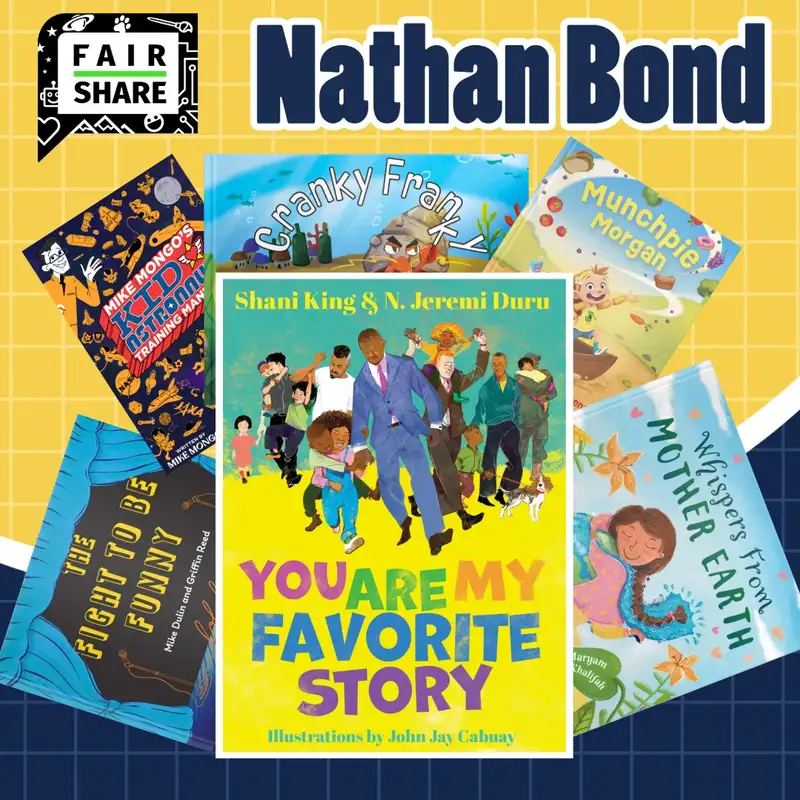
In this episode of The Premise, Jeniffer and Chad Thompson sit down with Nathan Bond, artist, educator, entrepreneur, and founder of Fair Share Publishing, an independent children's book publisher built around a simple idea: creators deserve a fairer share of the value they create.
Nathan shares the story behind Fair Share Publishing, from his 28-year career as a figurative painter and illustrator and his years teaching at Parsons School of Design to witnessing talented children's book illustrators struggle financially despite their success. He explains how those experiences led him to rethink everything from royalty structures and payment schedules to printing, distribution, accessibility, and the relationship between publishers and creators.
The conversation also takes a close look at You Are My Favorite Story, a children's picture book created by Shani King and Jeremi Duru and illustrated by John Jay. Nathan explains how the book came together, why its representation of fatherhood matters, and how thoughtful illustration can add layers of meaning that children discover over repeated readings.
From the economics of publishing to social media, independent bookstores, libraries, and the future of children's books, this episode offers a fascinating behind-the-scenes look at what it means to build a publishing company around creators rather than simply around the bottom line.
In This Episode
- Why Nathan Bond founded Fair Share Publishing
- The financial challenges facing even successful children's book creators
- Why traditional royalty and payment structures can make it difficult for creators to survive
- Fair Share's 50% net royalty model
- How real-time sales tracking gives creators greater financial transparency
- Why Fair Share initially operated as a direct-to-consumer publisher
- The environmental considerations behind Fair Share's printing and fulfillment model
- The supportive and collaborative culture of independent publishing
- The story behind You Are My Favorite Story
- Why the book focuses on helping fathers and male role models express emotion
- How illustration can communicate layers of meaning beyond the written text
- The importance of subtle visual details in children's books
- How QR codes extend children's books beyond the printed page
- Fair Share's "Listen, Learn and Play" approach
- Making books and educational materials more accessible to children, families, teachers, and libraries
- Why library distribution is so important for independent publishers
- The financial realities of producing high-quality children's picture books
- The role of social media in discovering and connecting with audiences
- How Fair Share supports independent bookstores
- Why community and collaboration matter in independent publishing
- What Fair Share looks for when reviewing authors' manuscripts and illustrators' portfolios
- How the company tries to make the publishing process more accessible to creators without agents
A Different Approach to Royalties
One of the most striking aspects of Fair Share Publishing is its approach to creator compensation.
Nathan describes starting with the question of what would represent the maximum amount a publisher could realistically share with creators. The result was a 50% royalty rate on net revenue, with expenses such as payment processing clearly accounted for before the revenue split.
Fair Share also designed a system in which creators can see their sales in real time and better anticipate their monthly payments. For Nathan, this transparency addresses a fundamental problem in the traditional publishing system: creators can struggle to budget when royalty payments arrive only every six months, nine months, or even longer.
Supporting Libraries & Independent Bookstores
Nathan explains why distribution has become increasingly important to Fair Share's mission. Libraries and schools can face significant restrictions on where they can purchase books, making it difficult for small publishers to reach these audiences without an established distributor.
Fair Share has also taken an unusual approach to audiobook access for libraries. When a library purchases a physical book, it receives ongoing downloadable audiobook rights, reducing additional costs and administrative burdens for libraries.
The company also actively supports independent bookstores. Nathan describes creating geographically targeted social-media advertising for bookstores that purchase Fair Share titles, using the publisher's marketing resources to help drive attention toward those local businesses.
Advice for Authors & Illustrators
Nathan also pulls back the curtain on Fair Share's submission process.
Fair Share continually accepts illustrator portfolios, allowing the company to build a database of artists for future projects. Manuscript submissions are generally opened once a year because of the time required to evaluate them.
The company has also used open calls to discover illustrators without requiring them to have an agent. Nathan describes this as part of Fair Share's effort to open doors for artists who might otherwise have difficulty entering the publishing industry.
Perhaps most notably, Fair Share takes time to walk authors and illustrators through their contracts. Nathan personally meets with creators over Zoom to explain the terminology and answer questions—particularly important for creators who don't have agents representing them.